 Request Proposal
Activated Carbon vs RCO vs RTO: How to Start Comparing VOC Treatment Routes
When a factory first investigates VOC exhaust treatment, three names often appear quickly: activated carbon, RCO, and RTO. They are not interchangeable products, and a lower first-cost route is not automatically the simpler route over time.
The useful question is not “Which one is best?” It is: which route fits the actual exhaust stream, operating pattern, capture arrangement, and project boundary?
This guide gives a plain-English first comparison for teams preparing to speak with an equipment supplier. It is general orientation, not a design, permit decision, safety assessment, or performance guarantee.
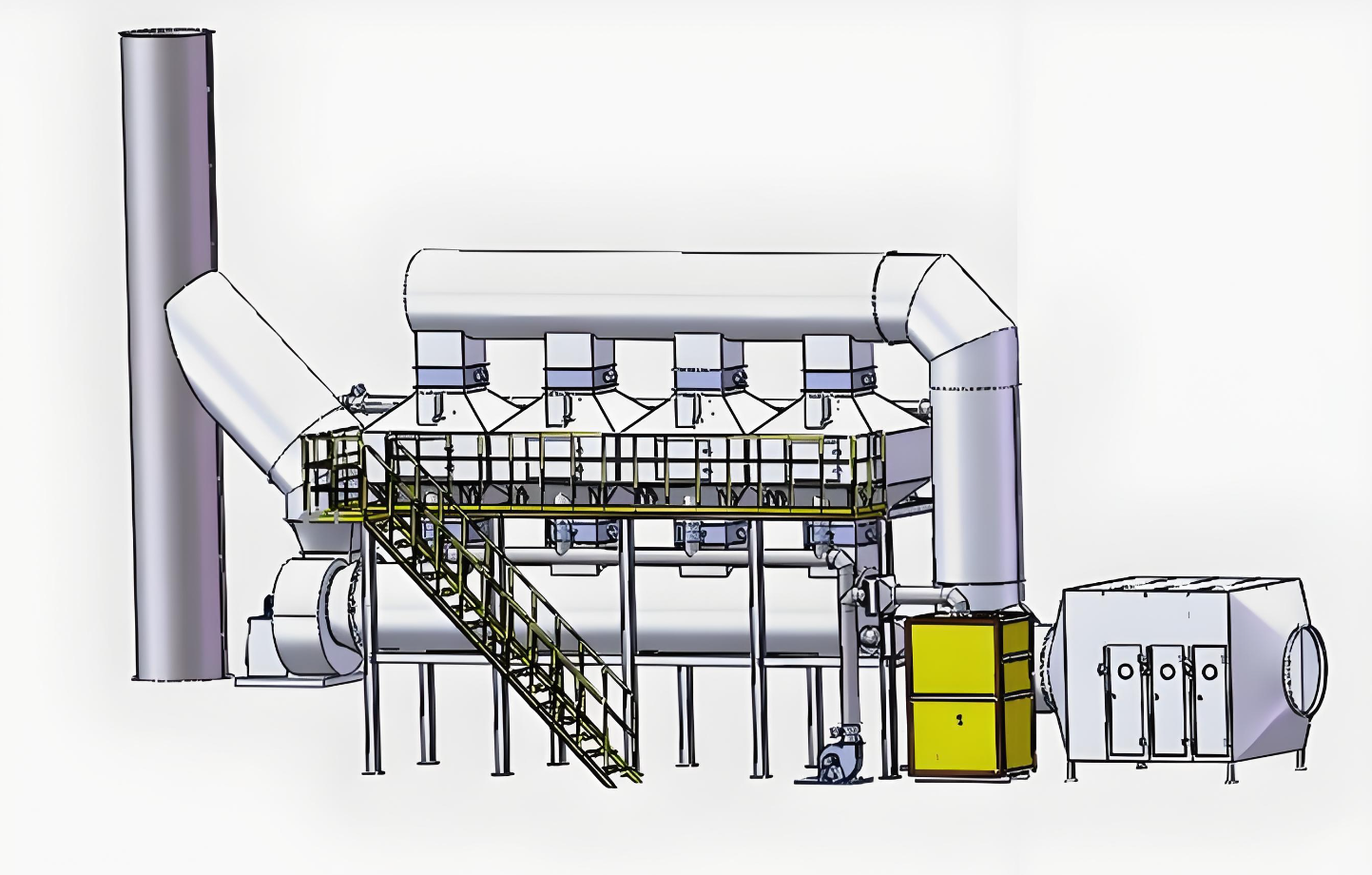
First, what are these three routes?
Activated carbon: capture by adsorption
Activated carbon is commonly used to adsorb some organic vapors from an air stream. In simple terms, vapor molecules are held in the porous carbon material. The system therefore depends on suitable stream conditions and a plan for monitoring, changeout, regeneration, or other material management.
It can be part of a VOC-control discussion where the exhaust and operating pattern are appropriate. It is not a universal “fit-and-forget” filter. Dust, mist, humidity, contaminants, concentration changes, fire/safety considerations, and the carbon-management plan all need project-specific review.
RCO: catalytic oxidation with heat recovery
RCO means regenerative catalytic oxidizer. It uses catalyst and regenerative heat recovery as part of an oxidation route for certain VOC duties. The catalyst is a key part of the process, so the actual compounds and possible contaminants matter.
An RCO conversation should include more than airflow. Teams should discuss materials used, expected changes in production, upstream carryover, service access, and how the system will be operated. Do not assume every mixed or uncharacterized stream is suitable for catalytic treatment.
RTO: thermal oxidation with heat recovery
RTO means regenerative thermal oxidizer. It is another oxidation route, using thermal oxidation and regenerative heat recovery. It is often considered for some continuous industrial VOC streams, especially when the project has enough verified operating information to define the duty.
RTO is not a shortcut around collection quality, pretreatment, site layout, utilities, or local requirements. Some streams may need upstream protection or a different route. A system discussion should always begin with the real stream, not the equipment acronym.
For a closer two-technology discussion, see RTO vs RCO: How to Choose VOC Oxidation Equipment. This article is broader: it helps a new buyer decide what to ask before placing activated carbon, RCO, and RTO on the same shortlist.
A practical first comparison
| Route | Plain-English function | What the buyer should clarify early | Operating conversation to expect | Important boundary |
|---|---|---|---|---|
| Activated carbon | Holds some VOCs in porous media | VOC type, moisture, dust/mist, concentration pattern, operating hours | Media condition, monitoring, changeout/regeneration, safe material handling | A carbon bed is not automatically suitable for every vapor or mixed stream. |
| RCO | Oxidizes certain VOCs using catalyst and heat recovery | Stream chemistry, catalyst-sensitive contaminants, capture consistency, pretreatment | Catalyst protection, maintenance access, startup/shutdown pattern | Catalyst compatibility must be evaluated for the real stream. |
| RTO | Oxidizes certain VOCs using thermal oxidation and heat recovery | Flow, concentration variation, production schedule, upstream carryover, site constraints | Collection, pretreatment, utilities, controls, maintenance access | An RTO is not automatically the right answer for every flow, concentration, or schedule. |
This table is a decision-starter, not a sizing chart. It deliberately avoids a universal ranking because the same route can be sensible in one duty and a poor fit in another.
Start with the factory’s operating pattern
Two factories can use similar coatings or solvents yet need different project discussions. One line may run steadily through multiple shifts. Another may start and stop, run batches, or change products frequently. One site may already have disciplined source capture and clean ductwork; another may be dealing with leaks, mixed branches, or visible mist.
The operating pattern affects the questions that matter: what is emitted, when it is emitted, how consistently it is captured, and what arrives at the treatment inlet. It also affects maintenance planning, material handling, utilities, controls, and the practical scope of installation.
Before asking for a model or price, map the process and record normal production, reduced production, cleaning, changeover, and unusual operating periods. A proposal based on the wrong schedule or an incomplete stream description can create confusion later.
Pretreatment and capture are part of the choice
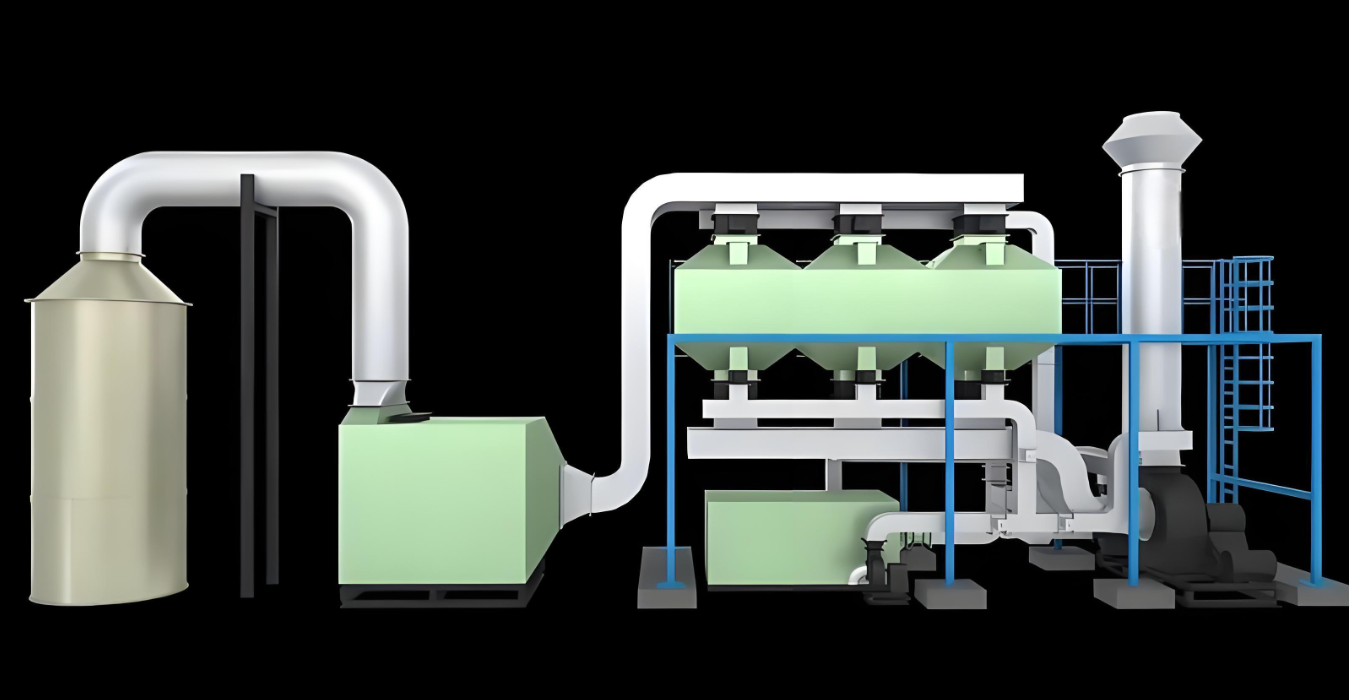
Treatment equipment only sees what the hood, enclosure, ductwork, and fan deliver to it. Poor capture can leave vapor in the workspace. Carryover of dust, fibers, aerosol, oil mist, or other materials can also change the downstream treatment discussion.
That does not mean every project needs the same pretreatment train. It means the team should identify what can reach the equipment and whether a protection stage is needed. The right answer depends on the process and material information, not on a generic sales diagram.
If your team is still determining whether the stream is VOC vapor, dust, mist, acid/alkaline gas, or a combination, begin with What Are VOCs in Factory Exhaust? and Industrial Exhaust Treatment Equipment: Match Dust, Acid Gas, Mist, and VOCs to the Right Route.
What to prepare before a supplier conversation
You do not need a complete engineering package to begin. A clear first data set is already valuable:
- A process list: coating, printing, adhesive, cleaning, drying, resin handling, or other relevant steps.
- Material names and available SDS documents for products used at each source.
- A sketch of hoods, enclosures, duct branches, fans, and any existing control equipment.
- Normal and peak operating schedule, including batches and product changeovers.
- Available airflow, temperature, and VOC information, clearly marked as measured, estimated, or unknown.
- Site constraints such as available space, access, utilities, discharge route, and local review requirements.
SERNO’s VOC Exhaust Data Checklist Before RTO Quotation can help organize a more detailed handoff once the factory is ready for a scoped technical discussion.
Four first-time-buyer mistakes to avoid
1. Choosing by acronym alone
“We need an RTO” or “we need carbon” is not yet a project definition. Treat the acronym as a starting point for questions, not as the answer.
2. Treating airflow as the whole story
Airflow is important, but it does not reveal the material, concentration pattern, moisture, carryover, or production timing. Those factors can change the route discussion.
3. Leaving capture and pretreatment outside the scope
The main unit, collection system, ductwork, fan, pretreatment, controls, and installation boundary should be discussed together. A well-chosen main unit cannot correct every upstream issue.
4. Assuming a comparison table replaces local review
Local permits, emissions obligations, safety requirements, and waste-handling responsibilities are site-specific. Keep the applicable local requirements with the project record and review them with qualified local parties.
Which route should a factory investigate first?
There is no responsible one-line answer without the stream information. As a practical next step, make a short comparison sheet for each route: what it needs from the incoming stream, what it needs from the site, what operating task it creates, and what is still unknown.
If the stream has heavy dust, mist, unusual chemistry, frequent product changes, or unclear capture, resolve those questions before treating a route as selected. If the stream and schedule are stable enough to define, a supplier can give a more useful, clearly scoped discussion of activated carbon, RCO, RTO, or another approach.
FAQ
Is activated carbon always cheaper than RCO or RTO?
Not necessarily over the life of a project. The appropriate comparison includes stream suitability, media management, operating pattern, installation scope, maintenance, and site-specific requirements. A price comparison without those boundaries can be misleading.
Is RCO simply a smaller RTO?
No. Both are oxidation routes, but the process approach is different and an RCO uses catalyst. The real VOC chemistry and possible catalyst-sensitive contaminants need evaluation.
Can an RTO treat any VOC exhaust?
No. RTO suitability depends on the actual stream, concentration behavior, contaminants, pretreatment needs, operating schedule, site conditions, and local requirements.
What is the best first document to share with a supplier?
Share the process list, material/SDS information, capture/duct sketch, schedule, available measurements, and site constraints. Mark assumptions and unknowns plainly.
A clearer way to start a VOC-treatment project
SERNO can help structure an early technical conversation around the information you are authorized to share: process, materials, capture arrangement, operating schedule, and site boundary. That conversation should clarify the route to investigate—not promise an outcome before the stream has been reviewed.