 Request Proposal
Which Industries May Be a Fit for RTO? Start With Exhaust and Pretreatment
Plant teams often ask, “Is our industry suitable for an RTO?” It is a reasonable first question—but the industry name is only a starting point.
An RTO, or regenerative thermal oxidizer, may enter the discussion where a factory has an organic VOC exhaust stream and a treatment project can be defined around the real operating pattern. The answer depends on what leaves the process, how it is captured, how often the line runs, and what else travels in the duct.
This guide is general orientation for first-time buyers. It is not a system design, permit decision, safety assessment, or performance guarantee.
RTO suitability begins with the exhaust pattern, not the factory label
Two factories in the same sector can have very different treatment needs. One may run a steady, well-captured stream; another may have intermittent batches, cleaning events, mixed branches, or visible aerosol.
Before an RTO route can be assessed, document the proposed inlet: VOC composition where known, airflow, schedule, temperature, moisture, dust, mist, and unusual events.
For basic VOC context, see What Are VOCs in Factory Exhaust? and the industrial exhaust categories guide.
Industries that may start an RTO feasibility discussion
Spray coating, curing, and coated-product lines
Coatings, thinners, cleaning materials, and cure/dry stages may create a defined VOC exhaust stream. That can justify an RTO feasibility conversation.
Overspray, pigment-containing dust, sticky aerosol, changeovers, and cleaning periods still need their own review. A coating line is not automatically an RTO project just because solvents are used.
Flexible packaging, printing, and converting
Inks, solvents, laminating adhesives, and drying sections can lead packaging and converting teams to investigate VOC treatment. Map each relevant source and distinguish normal production from wash-up, changeover, and start/stop conditions.
See the printing and flexible-packaging VOC guide for sector detail. Capture and upstream contaminants still need review.
Resins, adhesives, chemical processing, and formulated materials
Batch mixing, coating, impregnation, reaction, drying, and solvent handling may produce VOC-bearing exhaust. Process records and material information matter because the duty can vary.
Ingredients, corrosive components, or condensable material can change the route or upstream protection required.
Composite materials, FRP, and related fabrication
Composite layup, resin application, and curing can prompt a VOC-treatment review. Identify the sources, enclosure status, and any fiber, resin-droplet, or other carryover that could enter the ductwork.
The practical question is not just “Does the process use resin?” It is “What reaches the collection point under normal and non-routine conditions?” Specialty manufacturing and pharmaceutical steps can need the same documented review, especially for batches, cleaning, and product changes.
Why pretreatment is an early boundary—not an optional afterthought
Treatment equipment only receives what the capture system and ductwork deliver. If the stream contains materials that can foul, corrode, condense, or otherwise affect downstream equipment, the scope may need upstream protection or a different treatment route.
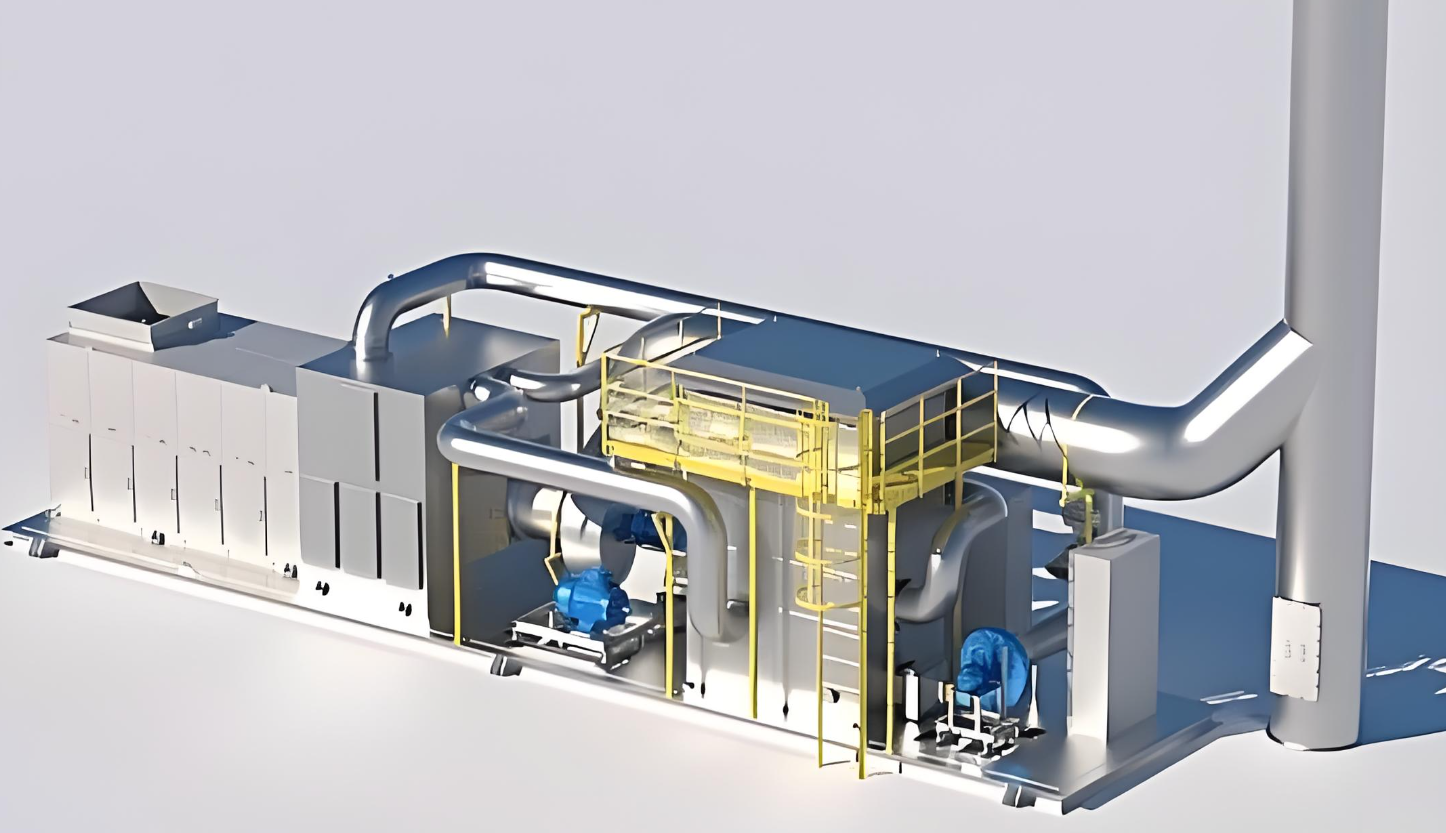
Common early-review items include:
- Dust and fibers: can build up in ducts, filters, and downstream equipment.
- Oil, resin, or coating mist: can deposit on surfaces and complicate maintenance.
- High-boiling or sticky condensables: may cool and collect before they reach the intended treatment zone.
- Acidic, alkaline, or corrosive components: may affect material selection and the overall route.
- High or changing moisture: can alter the practical discussion around capture, condensation, and heat balance.
- Mixed exhaust branches: may combine streams that should be characterized separately before a common treatment decision.
This does not automatically prescribe a filter, scrubber, or standard pretreatment train. It is a reason to look upstream before choosing equipment.
A simple industry-to-data checklist
| Process pattern | What to map before asking for an RTO proposal | Why it matters | Possible early scope question |
|---|---|---|---|
| Coating or curing | Coating/cleaning steps, hoods, overspray, line schedule | VOC vapor and aerosol may not behave the same way in collection | Is there mist or particulate carryover to control? |
| Printing or converting | Ink/adhesive use, dryer exhaust, wash-up, changeovers | The duty can vary through the production cycle | Which sources operate together, and when? |
| Resin, adhesive, or chemical batches | Material list, vent sources, batch timing, temperature, cleaning | Composition and flow can change by batch or product | Are condensables or corrosive components possible? |
| Composite fabrication | Resin application, enclosure status, fiber/dust sources | Capture and physical carryover both need review | What enters the duct besides vapor? |
| Specialty manufacturing | Product campaigns, solvents, containment, abnormal events | A single “average” may hide operational variation | Which scenario should define the design boundary? |
The table is a scoping aid, not a sizing chart or compliance decision.
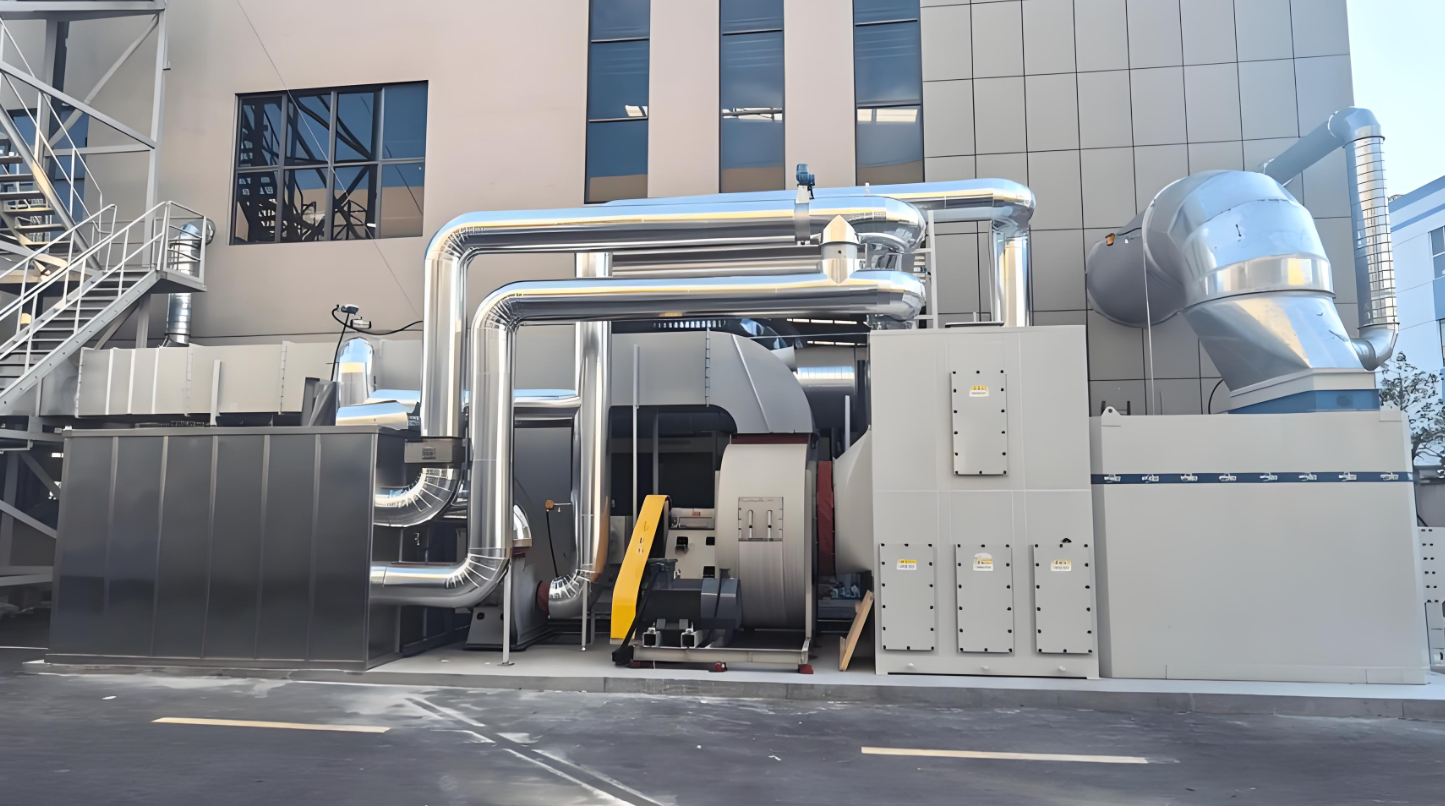
Five questions to answer before comparing RTO proposals
- Where is the VOC-bearing exhaust generated? Mark the sources, hoods, enclosures, and duct branches.
- What is known about the materials and operating schedule? Include normal production, changeovers, cleaning, and reduced-load operation.
- What else can enter the stream? Note dust, fibers, mist, oil, resin, acid/alkaline gas, or condensable material.
- What are the project boundaries? Clarify collection upgrades, pretreatment, electrical/gas utilities, space, access, stack, and controls—not just the oxidizer.
- Which local requirements must be checked? Confirm permit, testing, safety, and emission obligations with the relevant local authority and qualified advisors.
For a broader first comparison of treatment routes, read Activated Carbon vs RCO vs RTO. It explains why no equipment acronym can replace a defined exhaust-data package.
FAQ
Is RTO suitable for every factory that uses solvent?
No. Solvent use can justify a VOC-treatment review, but suitability depends on the actual stream, capture, operating pattern, contaminants, site constraints, and applicable requirements.
Does every RTO project need pretreatment?
Not necessarily. Evaluate what can reach the treatment equipment. The answer should come from the real stream, not a standard diagram.
Are coating and printing always the best industries for RTO?
They are common places to begin a VOC-treatment conversation, but neither is automatically a match. Process data and collection conditions still decide what needs review.
Can one RTO handle exhaust from several processes?
Possibly, but only after combined flow, timing, chemistry, contaminants, collection layout, and operating scenarios are reviewed.
What should a first supplier conversation include?
Bring a process list, material or SDS information where available, source locations, airflow estimates, operating schedule, photos or drawings of capture points, and notes about visible dust, mist, deposits, odor, or corrosion. It is fine if some information is still incomplete—state the gaps clearly.
Start with a scoped exhaust review
If your process may have a defined VOC exhaust stream, SERNO can help structure an early review around sources, operating pattern, capture, pretreatment boundaries, and site constraints. Share available data through the SERNO RTO product page or the site contact form. A final route needs project-specific engineering and local-requirement review.
Sources and retrieval note
Check air-emissions background against applicable official sources and local rules. The U.S. EPA’s Air Pollutant Emissions Trends Data page was accessible on 2026-07-28 and is cited only as general background, not as a requirement outside the United States.