 Request Proposal
Industrial Exhaust Treatment Equipment: Match Dust, Acid Gas, Mist, and VOCs to the Right Route
When a factory starts planning an exhaust-treatment project, it is tempting to ask for “one machine for the whole workshop.” The better starting point is: what is actually in each exhaust stream?
Dust, acid or alkaline gas, oil mist, and organic vapor do not behave in the same way. They may need different collection methods, different pretreatment, and different treatment routes. One process can also produce more than one of them.
This is a practical first guide for teams comparing industrial exhaust treatment equipment. It is not a permit decision, an exposure assessment, a performance guarantee, or a replacement for site-specific engineering.
Start with the process, not the equipment name
Walk the production route and note what leaves the process: a dry powder, droplets, a corrosive gas, a visible haze, a solvent vapor, or a mixture. Then connect each source to its hood, enclosure, duct, fan, or discharge point.
For example, grinding may release particulate. A pickling or chemical process may release acid mist or gas. Machining can create oil mist. Coating, printing, adhesive use, cleaning, drying, or resin processing may release organic vapors, sometimes called VOCs.
The same workshop can have several streams. Combining them without understanding the contents can complicate later treatment. A process sketch, material/SDS list, operating schedule, and existing duct layout are more useful than a broad equipment label.
For an earlier VOC-only first check, see What Are VOCs in Factory Exhaust?. That guide is one part of the wider stream-identification step described here.
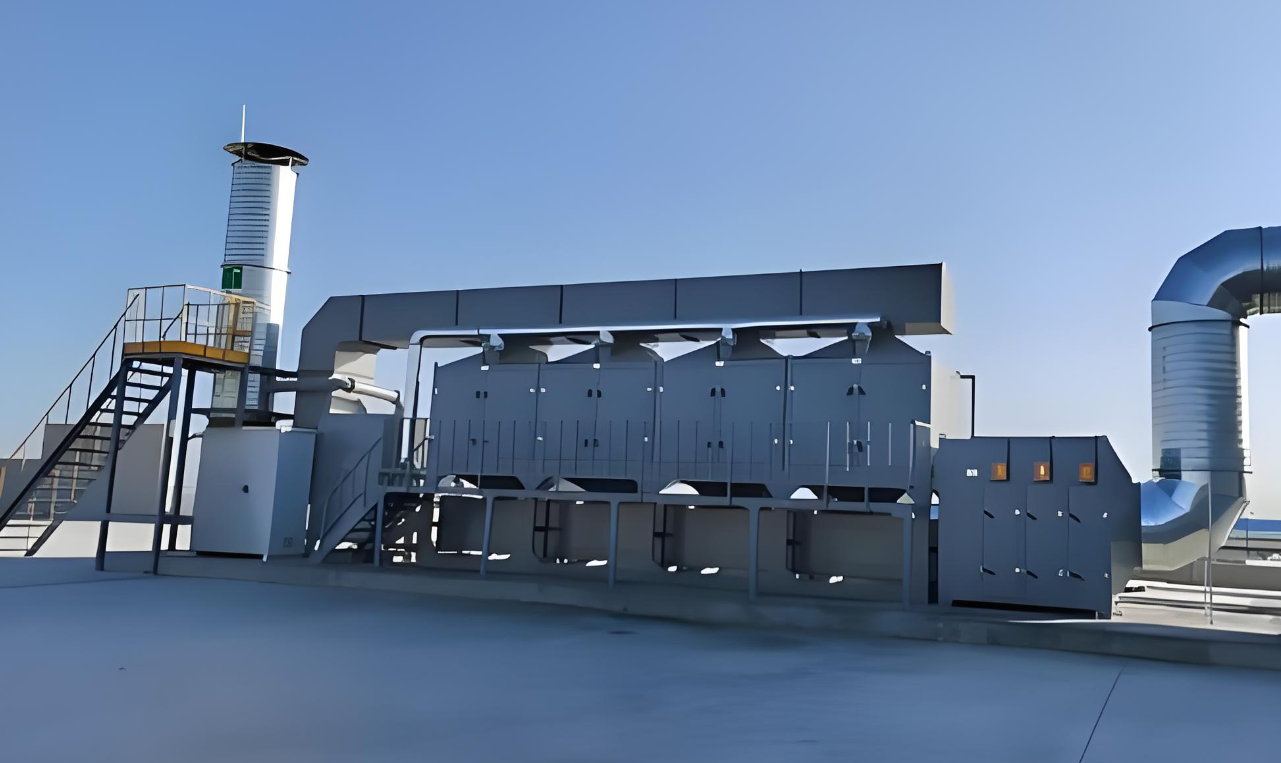
Four common exhaust categories
1. Dust and dry particulate
Dust is made of solid particles carried in air. It can come from cutting, sanding, grinding, mixing, conveying, trimming, or powder handling. The first questions are particle type, amount, size range, moisture, stickiness, and whether the dust has any special handling or safety considerations.
Typical first routes can include source capture and a suitable particulate-collection stage. The correct collector, filter media, cleaning arrangement, disposal method, and safety measures depend on the real material. A dust collector is not automatically a VOC treatment system.
2. Acid or alkaline gas and mist
Acidic or alkaline emissions can arise from chemical processing, surface treatment, cleaning, etching, pickling, and similar steps. Some streams are gas-like; some include liquid droplets or mist. Their corrosive nature can influence duct materials, fans, drains, and downstream equipment.
A wet collection or scrubbing route may be considered for some such duties, but the actual chemistry, concentration, liquid handling, and local requirements matter. A generic scrubber name is not enough to confirm suitability.
3. Oil mist and process aerosol
Oil mist is made of very small liquid droplets, often associated with machining, lubrication, forming, cooking, or other processes that create aerosols. It can appear as haze, deposit on ductwork, or accumulate on surfaces.
The project team needs to distinguish mist from vapor and understand whether droplets, smoke, heat, or other contaminants are also present. Separation or filtration may be part of a route. If an oxidation system is later considered for an organic-vapor stream, upstream mist control can be important because the equipment must be protected from unsuitable carryover.
4. Organic vapors (VOCs)
VOCs are a category of compounds that can become vapor during manufacturing. Common source areas can include coating, printing, lamination, adhesive application, solvent cleaning, mixing, drying, curing, and resin handling. A smell can be a reason to investigate; it is not a measurement or a compliance conclusion.
Potential routes for some organic-vapor duties can include source reduction, improved capture, adsorption, catalytic oxidation, thermal oxidation, concentration systems, or combinations. A regenerative thermal oxidizer (RTO) is commonly considered for some continuous VOC duties, but it is not an automatic answer for every flow, concentration, schedule, or mixed stream. Learn more about the selection discussion in How to Select an RTO System for VOC Abatement and the technology comparison in RTO vs RCO.
A simple “stream to route” comparison
| What you see or record | First classification question | A route that may be considered | Important boundary |
|---|---|---|---|
| Dry powder or particles | What material, amount, and handling risk are involved? | Source capture and particulate collection | A particulate collector does not by itself confirm VOC control. |
| Corrosive gas or droplets | Is it gas, mist, or both? What chemistry is present? | Capture plus a compatible wet or other treatment stage | Materials, liquid handling, and local requirements matter. |
| Haze or oily deposits | Are they droplets, smoke, vapor, or a mixture? | Mist separation/filtration and source control | Do not send unsuitable carryover into downstream equipment. |
| Solvent-like vapor from a process | Which materials, operating hours, and capture points are involved? | Capture improvement, adsorption, oxidation, concentration, or a combination | Selection needs verified stream and site information. |
The table is an orientation tool, not a design specification. A professional review needs the actual process, materials, exhaust conditions, site constraints, and applicable local requirements.
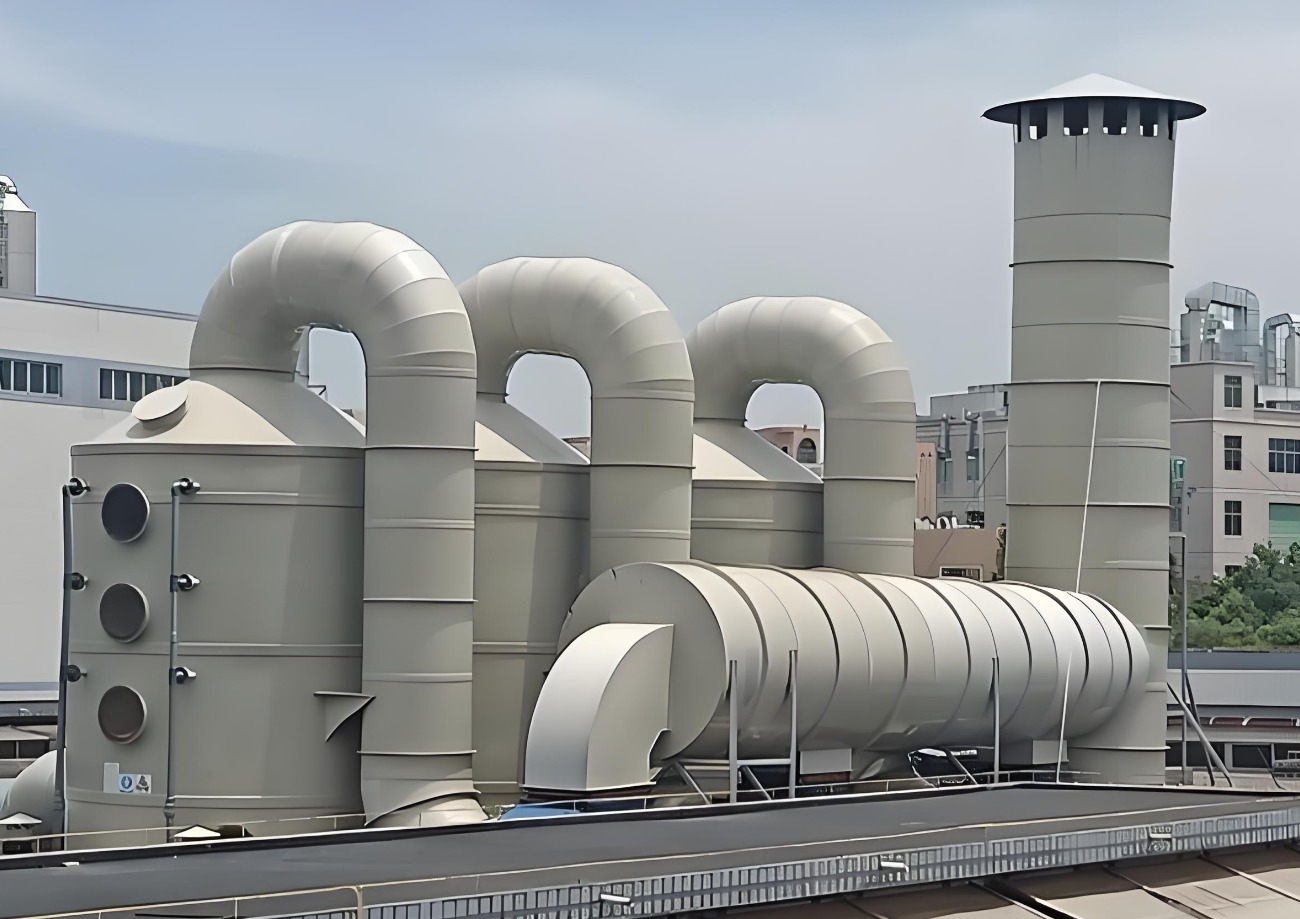
Why mixed streams need a staged discussion
Many factories do not have a neat, single-contaminant exhaust stream. A coating or chemical process may include vapor, moisture, droplets, or particles. A shared duct can mix emissions from different operations. Pretreatment may therefore be part of the project, not an optional afterthought.
Before connecting a new source to an existing system, document what is already captured and when each branch runs. The team should also identify any changes in material, production rate, line layout, or operating hours. This helps prevent a treatment decision from being made on incomplete assumptions.
For a quotation-stage handoff, SERNO’s VOC Exhaust Data Checklist shows the kind of operating information that turns a general question into a more focused technical conversation.
A five-item factory self-check
- List each process step that produces dust, mist, gas, or vapor.
- Record the raw material and available SDS for each source.
- Mark the capture point, duct branch, fan, and current control equipment.
- Note whether the source runs continuously, in batches, or only during certain shifts.
- Keep local permit, inspection, and emissions requirements with the project record for qualified review.
Unknown values should stay marked as unknown. Do not invent airflow, concentration, removal performance, or compliance status in order to obtain an equipment comparison.
FAQ
Can one exhaust-treatment system handle every factory emission?
Not automatically. Some sites have separate streams; others need a staged route. The answer depends on the actual contaminant mix, capture layout, operating pattern, compatibility, and applicable requirements.
Does a scrubber remove VOCs?
That cannot be assumed. Treatment depends on the actual compounds and stream conditions. Identify the contaminant and have the route assessed for the installed process.
Can an RTO accept dust or oil mist directly?
Do not assume so. Particulate, mist, moisture, and other carryover may create a pretreatment question. A site-specific review should establish what reaches the treatment unit and what protection is needed.
What should we send before asking for a proposal?
Share the process list, material/SDS information, capture and duct sketch, operating schedule, existing controls, known changes, and the local requirement you need to consider. Only provide information you are authorized to share.
Choose the route after identifying the stream
SERNO can help organize an early conversation around your process, materials, capture points, operating pattern, and available drawings. Send verified site information for a scoped technical review. Final technology selection, installation scope, and any compliance conclusion must be confirmed for the actual process and applicable local requirements.