 Request Proposal
RTO Filter Stock Planning: Set Evidence-Based Change Triggers for High-Dust VOC Exhaust
For an RTO inlet train, “keep some spare filters” sounds simple until production is waiting, the installed element has an unclear configuration, and the only available signal is a single differential-pressure reading. In high-dust VOC service, a prefilter is part of the boundary that protects fans, ductwork, downstream heat-transfer surfaces, and—where installed—a concentrator or catalytic stage. A stock decision therefore needs more than a warehouse count.
The useful question is not how many filters should every plant hold? It is: what evidence tells this plant when stock is at risk, which replacement is actually suitable, and who can make a controlled change decision? The answer depends on the exhaust source, loading pattern, element construction, storage condition, approved change procedure, supplier information, and the plant’s own risk review. This guide offers a decision structure, not a universal service-life or differential-pressure limit.
1. Define the protected boundary before counting inventory
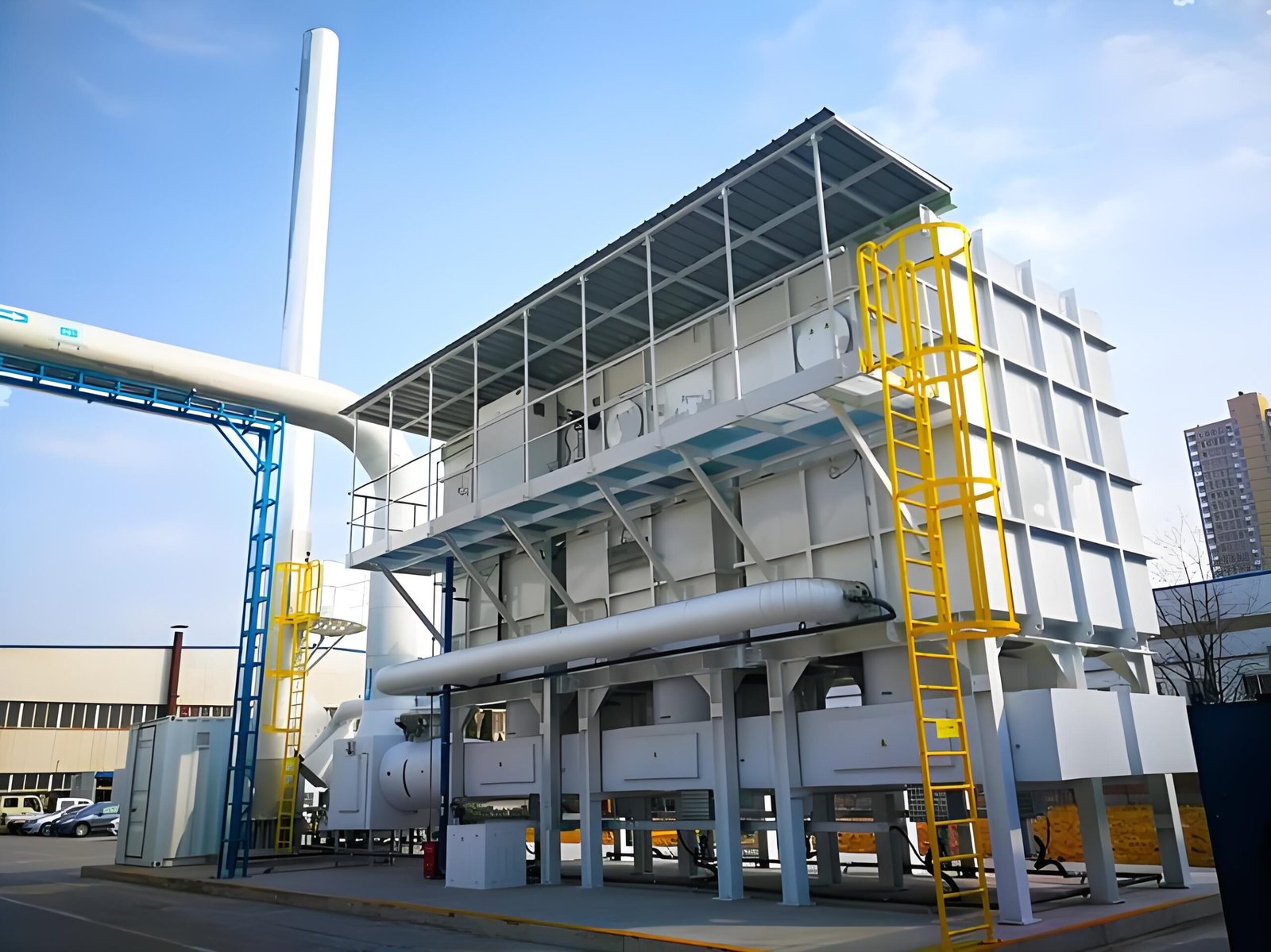
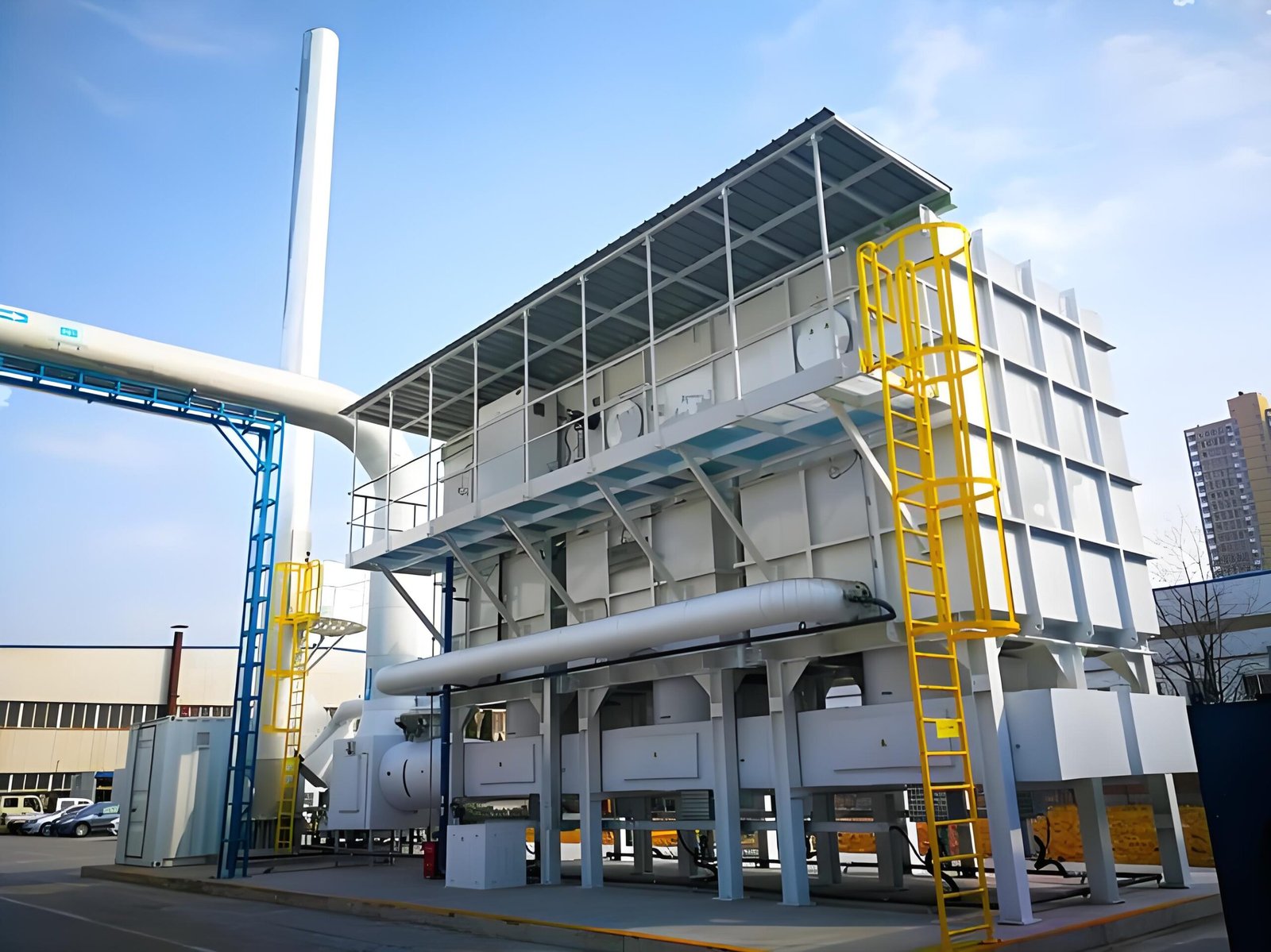
Start by mapping the part of the exhaust path that the filters protect. The boundary may include capture duct branches, a pre-separator, the filter housing and its access doors, pressure taps, the induced-draft fan, isolation or bypass dampers, and the RTO inlet. If an RTO uses a zeolite rotor or an RCO catalyst downstream, the contamination sensitivity may change what the team needs to record.
This map prevents an inventory error: treating every similar-looking cartridge or panel as interchangeable. A spare may be physically close in size yet unsuitable because of its sealing arrangement, media, gasket material, orientation, temperature rating, antistatic requirement, or approved duty. Record the exact position and approved configuration, then link the record to the work package or drawing the plant uses.
Questions to settle first include:
- Which dust, fiber, pigment, overspray, or residue can reach each filter location?
- Does the stream also contain moisture, mist, condensable material, or solvent vapor that can change loading behavior?
- Which upstream process states create the highest loading: cleaning, color change, start-up, upset, or normal production?
- What downstream asset is being protected, and what evidence does its owner need before a changed filter is released?
2. Build an approved filter identity record
Do not allow a spare rack label to become the only source of truth. Create a controlled identity record for every approved filter family. The record can be simple, but it should be reviewable by operations, maintenance, procurement, and engineering.
| Record field | Why it belongs in the stock plan |
|---|---|
| Filter location and equipment boundary | Connects the part to the actual exhaust path and protected asset |
| Approved manufacturer reference and revision | Reduces the chance of replacing an element with an unreviewed look-alike |
| Dimensions, quantity, sealing method, and flow direction | Supports a physical fit and assembly check |
| Media, gasket, and construction notes | Helps assess compatibility with dust, vapor, temperature, and cleaning practice |
| Storage conditions and received date | Makes degradation, damage, moisture exposure, and FIFO review visible |
| Evidence owner and escalation route | Clarifies who can hold, release, or seek engineering input |
If data are missing, mark the record as incomplete instead of inventing a specification from photographs. A missing approval detail is a procurement and engineering question, not a reason to force an uncertain part into service.
3. Use operating evidence to create change triggers
A change trigger is a condition that starts a review; it is not automatically a permission to bypass the site’s procedure or to replace an element at an arbitrary number. The best triggers combine trend context with direct observations.
Differential pressure is often useful, but it only becomes meaningful when compared under known conditions. A higher reading may reflect higher airflow, a production change, a wetter stream, a different fan condition, a blocked impulse line, or genuine loading. A lower reading can also be ambiguous: it may reflect lower airflow, an open bypass, a disconnected tap, or an element that is clean and correctly sealed. Record the operating state alongside the reading.
Useful review triggers may include:
- a sustained change in pressure behavior under a comparable operating case;
- a defined alarm, control response, or capture complaint under the site procedure;
- visible residue, moisture, corrosion, deformation, or abnormal door condition during an approved inspection;
- a known process change such as a new coating, ink, resin, cleaning solvent, or dust-generating operation;
- stock falling below the plant’s approved replenishment point after allowance for confirmed supplier lead time and receiving checks.
Avoid a rule that treats one local gauge glance as proof of filter condition. Tie the observation to time, airflow or fan state where available, source status, damper state where appropriate, and any known instrumentation limitation.
4. Separate the replacement decision from the reorder decision
Changing a filter and ordering a filter are linked but different decisions. A filter can require a planned change while stock remains adequate; conversely, a plant can have a healthy installed element while the lead time and minimum stock position create exposure for the next outage.
Use two visible decision points:
| Decision | Evidence to review | Typical responsible roles |
|---|---|---|
| Condition / change review | Comparable trend, visual condition, process state, filter identity, work window, approved safety controls | Operations, maintenance, EHS, engineering as needed |
| Reorder / stock review | Usable quantity, quarantine or damage status, approved configuration, supplier confirmation, receiving and storage plan | Maintenance planner, purchaser, stores, engineering for substitutions |
A carton in the warehouse is not necessarily usable inventory. Separate installed, available, reserved, quarantined, damaged, expired-by-site-rule, and unverified items. When substitution is proposed, route it for the level of technical review the plant requires rather than relying on a purchasing description alone.
5. Plan for high-loading events, not only average consumption
Average consumption can hide the events that empty a rack. High-dust VOC service may be affected by batch changes, spray-booth cleaning, sanding or trimming, maintenance work, a failed upstream separator, moisture carryover, or an operating upset. The purpose of planning is not to predict a precise element life; it is to make unusual demand visible early enough to control it.
For each known high-loading scenario, document what the operations team should report, which readings or observations are useful, who reviews the event, and whether the stock position needs a temporary reassessment. This gives procurement an evidence trail without turning a maintenance planner into a process chemist.
Where an upstream source has changed, do not assume the existing prefilter remains suitable. Revisit the stream description, expected particulate character, mist or condensate risk, temperature, flow range, and any safety implications before changing media or configuration. See Rotor RTO Pretreatment Evidence for a related source-to-protection review.
6. Preserve stock quality and installation readiness
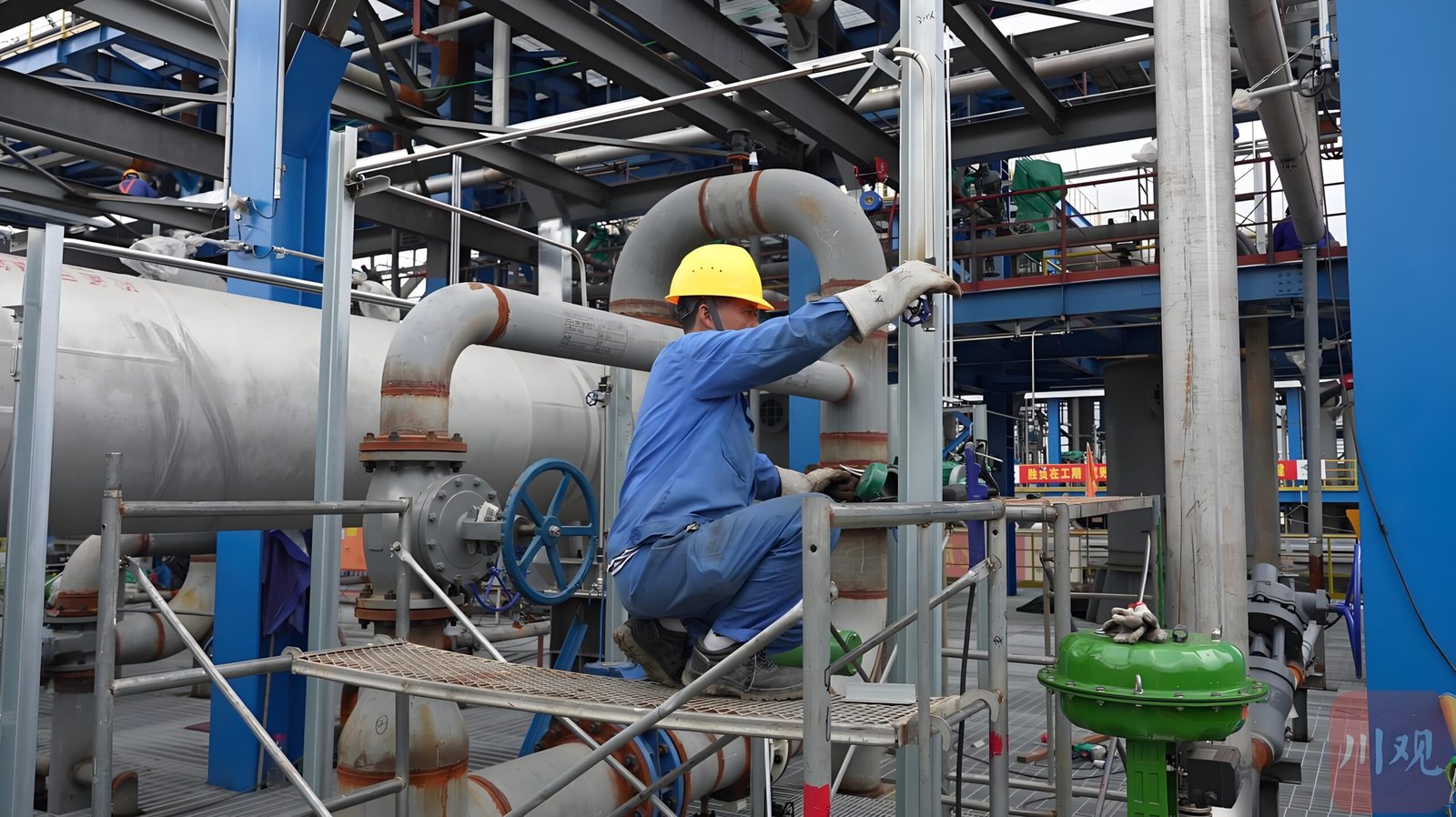
The condition of the spare matters as much as the count. Store elements in the supplier-recommended environment and protect them from moisture, crushing, contamination, ultraviolet exposure, and untraceable mixing. Keep packaging and identification intact until the approved work step requires opening it.
A practical readiness check before a planned outage can include:
- count the approved, usable elements and compare them with the work scope;
- inspect accessible packaging for water damage, crushing, incorrect references, or broken seals;
- confirm that clamps, gaskets, clips, lifting aids, access arrangements, and disposal provisions are part of the work plan;
- identify any quarantined or uncertain stock before production depends on it;
- record the stock decision, remaining uncertainty, and the escalation route.
This work supports a calm intervention. It does not replace isolation, permit, confined-space, lifting, exposure-control, or waste-handling requirements that apply at the site.
7. Close the loop after a change-out
Every change-out can make the next stock decision better—if the team retains the right information. Capture the actual element identity, observed condition, reason for change, operating context, quantity used, remaining usable stock, and any unexpected installation issue. Do not convert a one-time observation into a universal rule without engineering review.
The completed work should also connect to the release record. The post-change-out guide RTO Filter Integrity Verification explains why correct seating, restored ports, instrument context, and a controlled first operating observation matter. For the role boundary around the work package, see RTO Filter Change-Out Responsibility.
A simple evidence sheet for the next review
| Item | Record before approval or reorder |
|---|---|
| Current duty | Relevant process source, operating state, and known recent change |
| Filter identity | Approved reference, location, quantity, configuration, and any open uncertainty |
| Condition evidence | Trend context, inspection observation, alarms/complaints, or documented high-loading event |
| Stock position | Installed, available, reserved, quarantined, and damaged quantities—kept separate |
| Procurement evidence | Supplier confirmation, stated lead-time context, substitute status, and receiving plan |
| Decision and owner | Change review, reorder review, hold point, date, responsible role, escalation path |
FAQ
Can we set one differential-pressure number for every RTO inlet filter?
No. The applicable range and response must come from the filter supplier, equipment documentation, system design, site procedure, and real operating context. A differential-pressure trend can support a review, but a standalone universal number can create false confidence.
Is a filter on the shelf always ready for installation?
Not necessarily. Confirm identity, configuration, packaging condition, storage history, and the approved work scope. Damaged, wet, unverified, or untraceable stock should be separated from usable inventory until the responsible team decides otherwise.
Does high dust automatically mean an RTO needs a specific filter type?
No. Pretreatment selection depends on the dust or mist character, vapor composition, moisture, temperature, flow, pressure drop, downstream equipment, and safety review. An equipment supplier can assess a defined duty; it should not be inferred from the word “dust” alone.
What should a purchaser ask when a substitute is offered?
Ask for the exact reference and revision, dimensions and seal arrangement, media and construction information, applicability to the intended duty, storage and receiving requirements, and the technical approval route. Do not treat an apparently similar item as equivalent without the review your site requires.
CTA
Planning a VOC-treatment inlet train or reviewing a high-dust exhaust source? Share the exhaust source description, airflow range, operating pattern, particulate or mist observations, current prefilter arrangement, and downstream equipment context. SERNO can help frame the questions needed for a site-specific RTO or pretreatment discussion—without assuming a universal filter life or treatment outcome.