 Request Proposal
RTO Filter Change-Out Responsibility: Define the Boundary Before It Becomes an Outage
An RTO pretreatment filter is often specified as a component but managed as an assumption. One team expects the equipment supplier to provide the first replacement set. Another assumes the plant will purchase consumables. Operations may believe maintenance will isolate the train, while maintenance expects a contractor to do the work. The consequence is usually not a design debate—it is a delayed change-out, an unplanned bypass decision, or a restart with incomplete checks.
For industrial VOC-treatment systems, filter change-out responsibility needs a written boundary before commissioning and again before each planned service event. The purpose is not to transfer risk with a sentence in a purchase order. It is to make every required action visible: monitoring, trigger approval, spare supply, isolation, physical replacement, waste handling, leak checks, and release to operation.
This guide gives plant teams and industrial buyers a practical way to set that boundary. Exact tasks depend on the filter type, contaminant, local waste rules, site procedures, and the agreed project scope. Where uncertainty remains, record it as an open item rather than treating it as a routine maintenance detail.
1. Start with the filter’s job, not its label
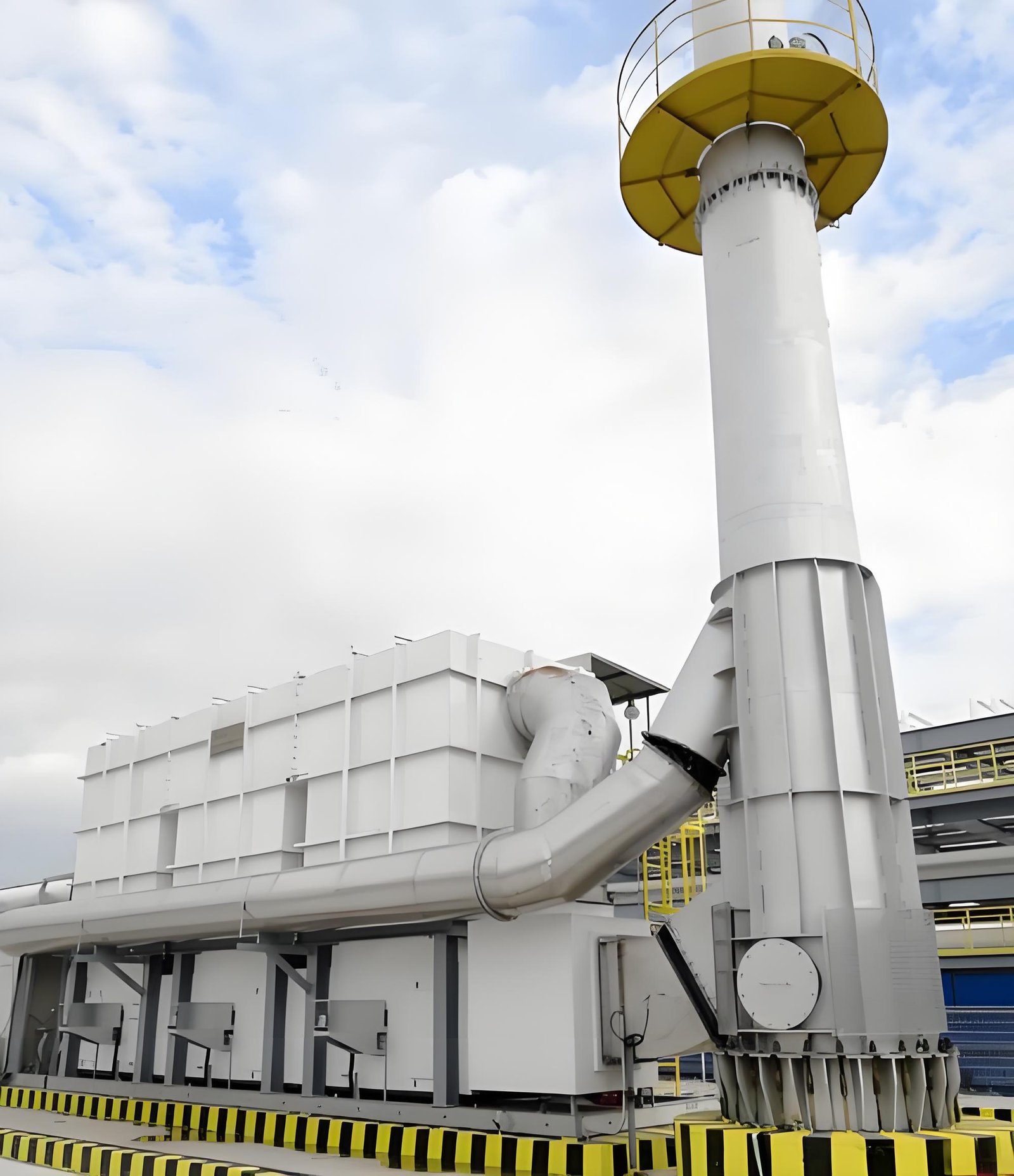
“Filter” can mean a coarse inlet screen, a prefilter bank, cartridge filters, bag filters, a mist coalescer, or a multi-stage arrangement ahead of a Rotor RTO concentrator. The replacement method and ownership questions change with the service duty.
Before assigning responsibilities, create a short equipment record that identifies:
- the filter location and the process streams it protects;
- the expected contaminant form: dust, overspray, fibre, aerosol, condensable material, or mixed loading;
- the permitted operating conditions and any differential-pressure or inspection trigger stated by the OEM;
- access doors, lifting space, isolation points, and required personal protective equipment;
- the approved replacement element specification and compatible sealing arrangement; and
- whether a plugged filter can affect fan loading, capture balance, downstream equipment protection, or safe operating logic.
This record keeps the team from applying a generic change-out routine to equipment with a different risk profile. It also makes it easier to identify whether the supplier’s scope ends with delivery of the housing or includes a defined maintenance package.
2. Separate an operating trigger from a replacement decision
Differential pressure is useful evidence, but it is not a universal instruction to change an element at one fixed value. A rising reading can reflect loading, a sensor issue, a damper position change, wet media, altered airflow, or a measurement problem. Conversely, a low reading does not prove that an element is intact or correctly sealed.
Define two linked decisions:
- Operating trigger: Who reviews the trend or inspection finding and calls for investigation?
- Replacement authorization: Who confirms that the element, work window, isolation plan, and replacement parts are ready?
The plant normally owns operating decisions because it controls production and site safety. The supplier or qualified service provider can define recommended evidence and constraints, but should not be assumed to own plant authorization unless that duty is contractually included. A clear escalation path matters when the filter protects a zeolite rotor, catalyst, heat-recovery media, or another component sensitive to upstream contamination.
3. Put the full change-out sequence in a responsibility matrix
The most useful scope document is a matrix with one accountable owner for each action. “Supplier,” “plant,” and “contractor” may each have work to do; the matrix should still name who coordinates and signs off.
| Change-out activity | Typical accountable owner | Evidence to retain | Scope question to close |
|---|---|---|---|
| Establish inspection / DP trend routine | Plant operations or maintenance | trend, inspection log | Who owns instrument checks and alarm review? |
| Define approved element and seal specification | Equipment supplier / OEM | data sheet, part number, revision | Can an equivalent element be used without written review? |
| Forecast and procure replacement stock | Plant procurement or contracted service provider | stock record, purchase record | Minimum on-site stock and lead-time assumption? |
| Plan access, permit, LOTO and production window | Plant | approved work plan | Which party controls isolation and release? |
| Remove and install elements | Plant maintenance or qualified contractor | task record, photographs if site procedure requires | Who supplies labour, lifting aids and supervision? |
| Handle used elements | Plant / licensed waste route as applicable | waste record as required | What contaminant classification and local route apply? |
| Inspect seals, doors and drain condition | Assigned maintenance lead | checklist, corrective actions | Which defects require OEM review before restart? |
| Return system to service | Plant operations with agreed technical checks | restart record | Who confirms fan, DP, leakage and interlocks are acceptable? |
This is a planning tool, not a substitute for a site’s lockout/tagout, waste, or safety procedure. The intended result is simple: no essential step relies on an unnamed party.
4. Clarify the boundary for spares and consumables
The phrase “spare filters included” is incomplete unless it answers several questions. Is the included quantity a commissioning set, a one-year allowance, a recommended first change-out, or only loose consumables provided with shipment? Does it include gaskets, retainers, drain components, and disposal bags? Who verifies the storage environment and shelf-life limitations?
For a procurement review, list the following explicitly:
- filter media type, dimensions, efficiency class or performance specification where applicable, and revision control;
- supplied quantity, intended duty, storage condition, and handover date;
- consumables needed for a complete replacement event, not only the main element;
- recommended reorder point and the source of that recommendation;
- supplier lead time stated as a planning input, not as a guaranteed delivery promise; and
- the approval route for substitutions.
Avoid assuming that a filter element which physically fits will provide the same protection. An unapproved substitution may alter pressure drop, sealing, moisture behaviour, media compatibility, or downstream contamination risk. If a project allows alternatives, define the required technical evidence and approver in advance.
5. Design access and isolation around the actual service task
Responsibility cannot compensate for poor access. A team asked to replace elements without safe clearance, isolation points, lighting, lifting provisions, or containment arrangements may delay the work—or create a safety exposure.
Before final acceptance or a maintenance shutdown, walk the change-out path from the stored spare to the housing. Confirm, within site procedures:
- access route, platform condition, guardrails, and work area clearance;
- location and ownership of electrical, pneumatic, process, and fan isolation points;
- whether negative pressure, residual VOCs, dust, or condensed material require controlled opening;
- method for preventing debris from entering the downstream duct during service;
- lifting or handling method for the installed elements; and
- condition of access doors, hinges, clamps, gaskets, drains, and inspection ports.
For multi-bank systems, document whether one bank can be isolated while the other remains in service. Do not assume partial operation is permitted: the answer depends on the equipment design, capture system, process emissions, and site operating limits.
6. Define restart evidence—not just “filter replaced”
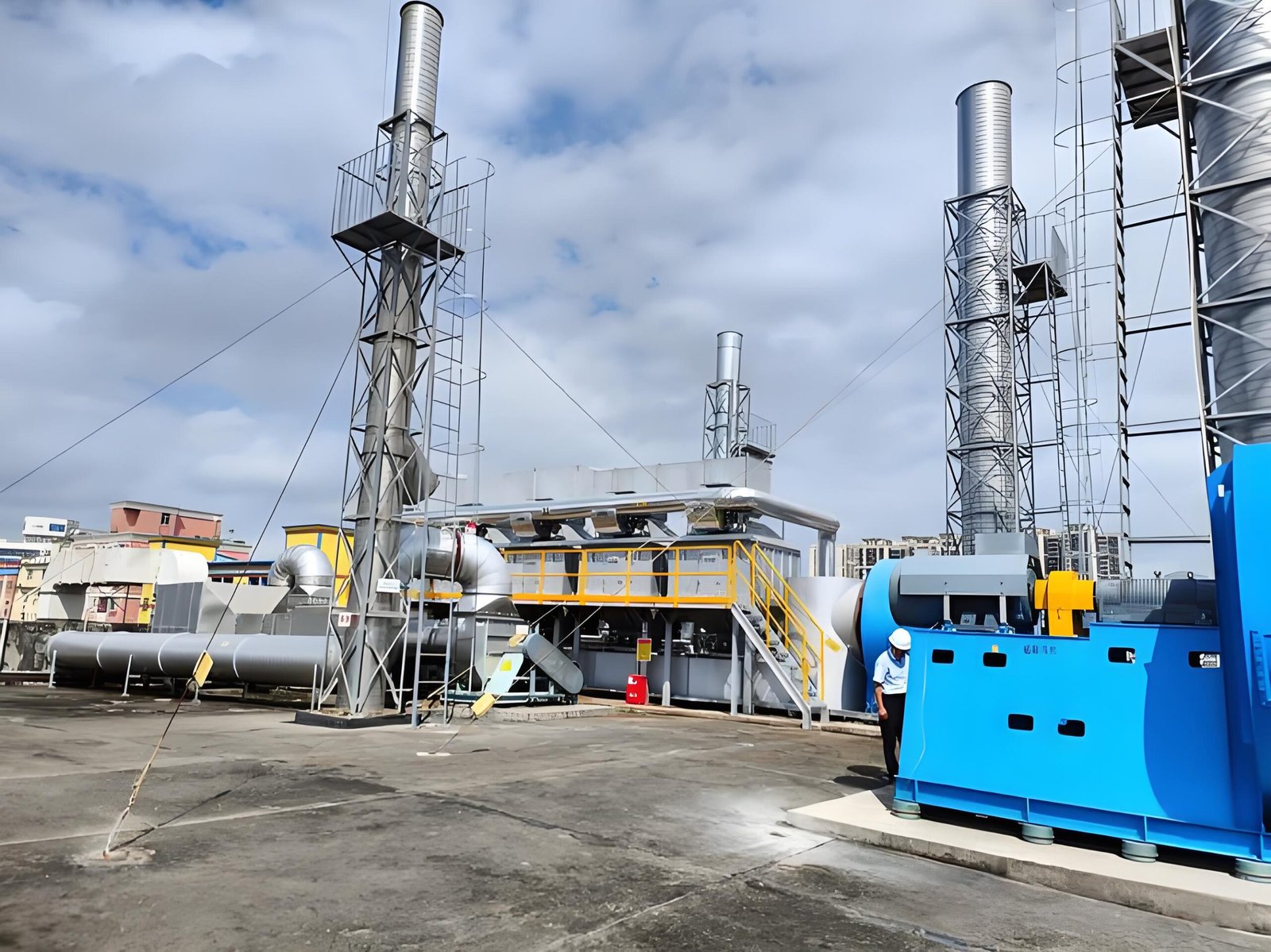
The physical replacement is only one point in the release process. A restart record should confirm the condition that matters for the specific system. The evidence can be brief, but it should be repeatable and retained with the maintenance history.
An appropriate release check may include:
- correct element orientation, quantity, seating, and door closure;
- no visible gap, damaged gasket, unsecured retainer, or unaddressed drain issue;
- isolation removed using the site’s authorized process;
- fan direction, airflow indication, and differential-pressure behaviour reviewed against the current operating context;
- no unexpected vibration, leakage, abnormal noise, or control alarm after return to service; and
- any deviation sent to the agreed engineering or OEM contact before declaring the train normal.
Do not present a single “normal” pressure-drop number as universal. Compare against the equipment’s own baseline, operating flow, temperature, and the manufacturer’s documented limits. Trend interpretation is more useful when operating conditions are recorded alongside it.
7. Build the responsibility boundary into project documents
The best time to resolve routine maintenance scope is before it becomes urgent. Add a filter change-out section to the technical clarification log, operations-and-maintenance manual, commissioning handover list, and service quotation where applicable.
At minimum, the document set should answer:
- What is included at delivery and what is excluded?
- Who owns recommended stock and how is a reorder need identified?
- Who approves a substitute element?
- Who provides site isolation, permits, labour, tools, and lifting equipment?
- Who controls used-filter handling under the site’s applicable procedures?
- What checks are required before the RTO, RCO, or Rotor RTO is released to operation?
- When should the equipment supplier be consulted rather than proceeding with a routine change?
If the project uses an EPC or a third-party maintenance contractor, add a named interface owner. “By others” is not a boundary; it is a prompt for a follow-up question.
8. A practical buyer checklist before handover
Use this short checklist to test whether the responsibility is operationally complete:
- [ ] The exact filter housing and approved replacement-element specification are identified.
- [ ] An inspection and trend-review owner is named.
- [ ] A planned trigger and authorization path is documented.
- [ ] Initial and ongoing spare supply are separated in writing.
- [ ] Required gaskets, retainers, containment items, and tools are considered.
- [ ] Safe access, permits, and isolation ownership have been walked down at site.
- [ ] Used-element handling follows the plant’s applicable waste and safety procedures.
- [ ] A restart check and deviation-escalation contact are recorded.
- [ ] The final matrix appears in the handover package, not only in email.
FAQ
Is filter replacement always the RTO supplier’s responsibility?
No. It depends on the purchase scope, service agreement, site capability, and local procedures. The supplier may define the approved element and provide technical guidance, while the plant or a contracted service provider performs routine change-out. Put the division in writing.
Can we use differential pressure alone to decide when to replace a filter?
Not reliably in every case. Differential pressure should be interpreted with airflow, process changes, inspection findings, and the equipment’s documented limits. Confirm that the reading itself is credible before using it as the only decision basis.
What should be included with the first set of replacement filters?
Confirm the element specification, quantity, gaskets or seals, retainers or hardware as applicable, storage requirements, and the intended purpose of the set. Do not assume a supplied set covers a particular operating period without an agreed service basis.
Why does filter access belong in an RTO procurement review?
Because the filter may protect downstream equipment and its condition can affect airflow and pressure drop. If access, isolation, or replacement ownership is unclear, a routine task can delay production and increase maintenance risk.
Conclusion: make the routine task contractually visible
RTO filter change-out responsibility is a small line item with a large operational effect. Define the filter duty, name the accountable owner for every step, verify site access, and document the restart evidence before handover. That gives plant teams a workable maintenance process and gives suppliers a clearer technical interface.
SERNO can review a VOC-treatment scope matrix with your process data, pretreatment arrangement, access constraints, and maintenance model. Share the filter-housing details, contaminant description, airflow conditions, and the responsibilities already assigned; we will identify the questions that should be closed before implementation.