 Request Proposal
SERNO Knowledge Center
VOC Treatment for Coating Lines: RTO or Rotor RTO?
Coating lines often have large exhaust volume and changing solvent concentration. Choosing between a direct RTO and a zeolite rotor concentrator + RTO depends on airflow, VOC concentration, solvent type, humidity, temperature and operating schedule.
Understand each coating exhaust source
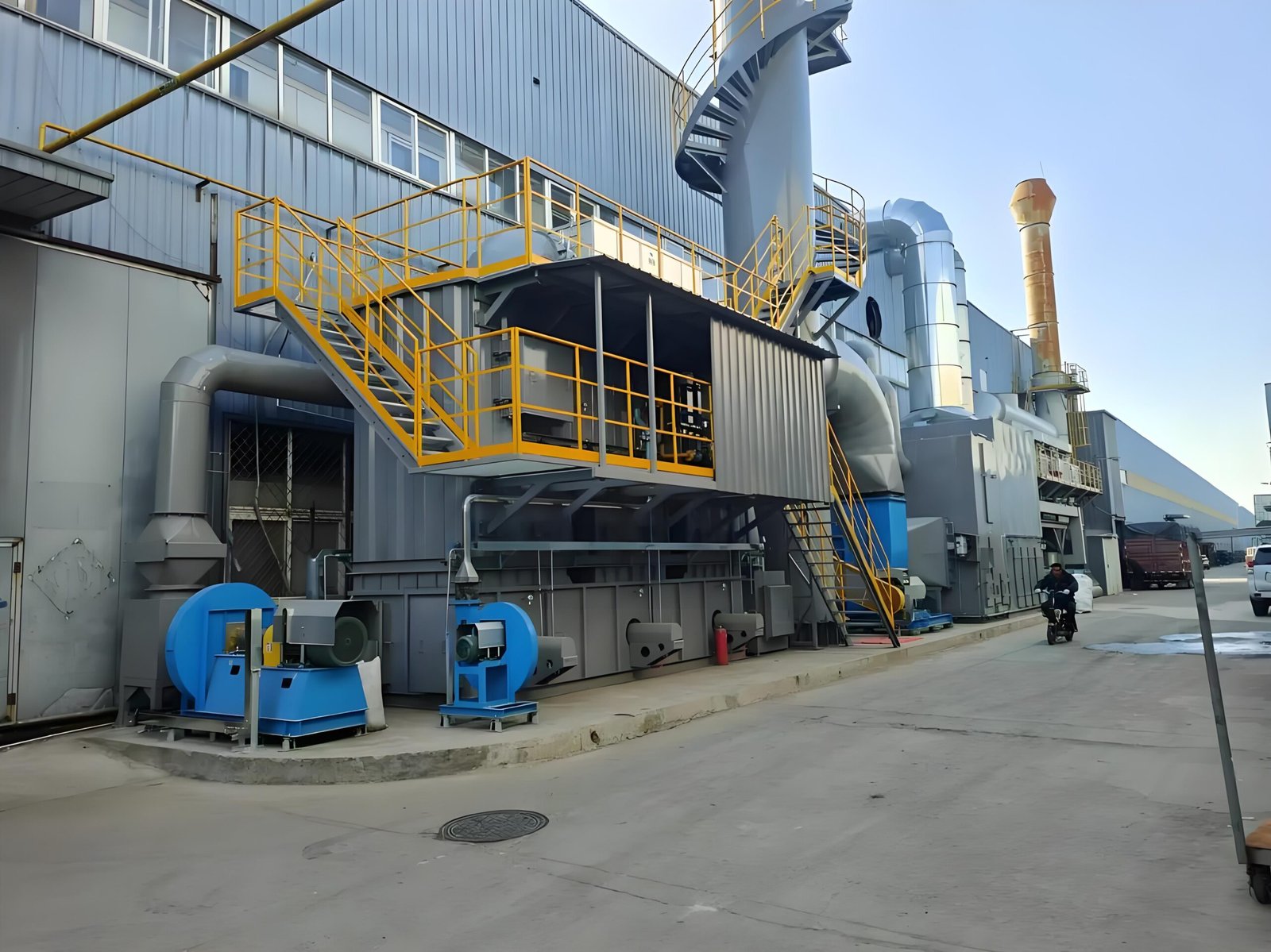
A coating workshop may include spray booth exhaust, drying oven exhaust, flash-off area exhaust and cleaning solvent exhaust. These streams should be measured separately because their concentration, temperature and humidity can differ greatly.
If all streams are combined without analysis, the system may become oversized, unstable or difficult to operate efficiently.
- Booth exhaust often has large airflow and lower VOC concentration.
- Drying oven exhaust can have higher temperature and concentration.
- Cleaning exhaust may create intermittent peaks.
- Paint mist or resin particles require pretreatment.
When direct RTO is suitable
A direct RTO is usually considered when VOC concentration is moderate and stable enough to support efficient thermal oxidation. It is also suitable when exhaust volume is not extremely high and production runs continuously.
The advantage is a relatively direct process route and robust oxidation performance for compatible industrial solvent exhaust.
- Medium to high VOC concentration with stable production.
- Continuous operation that allows stable heat recovery.
- Exhaust temperature and humidity within design range.
- Solvent components suitable for thermal oxidation.
When Rotor RTO should be considered
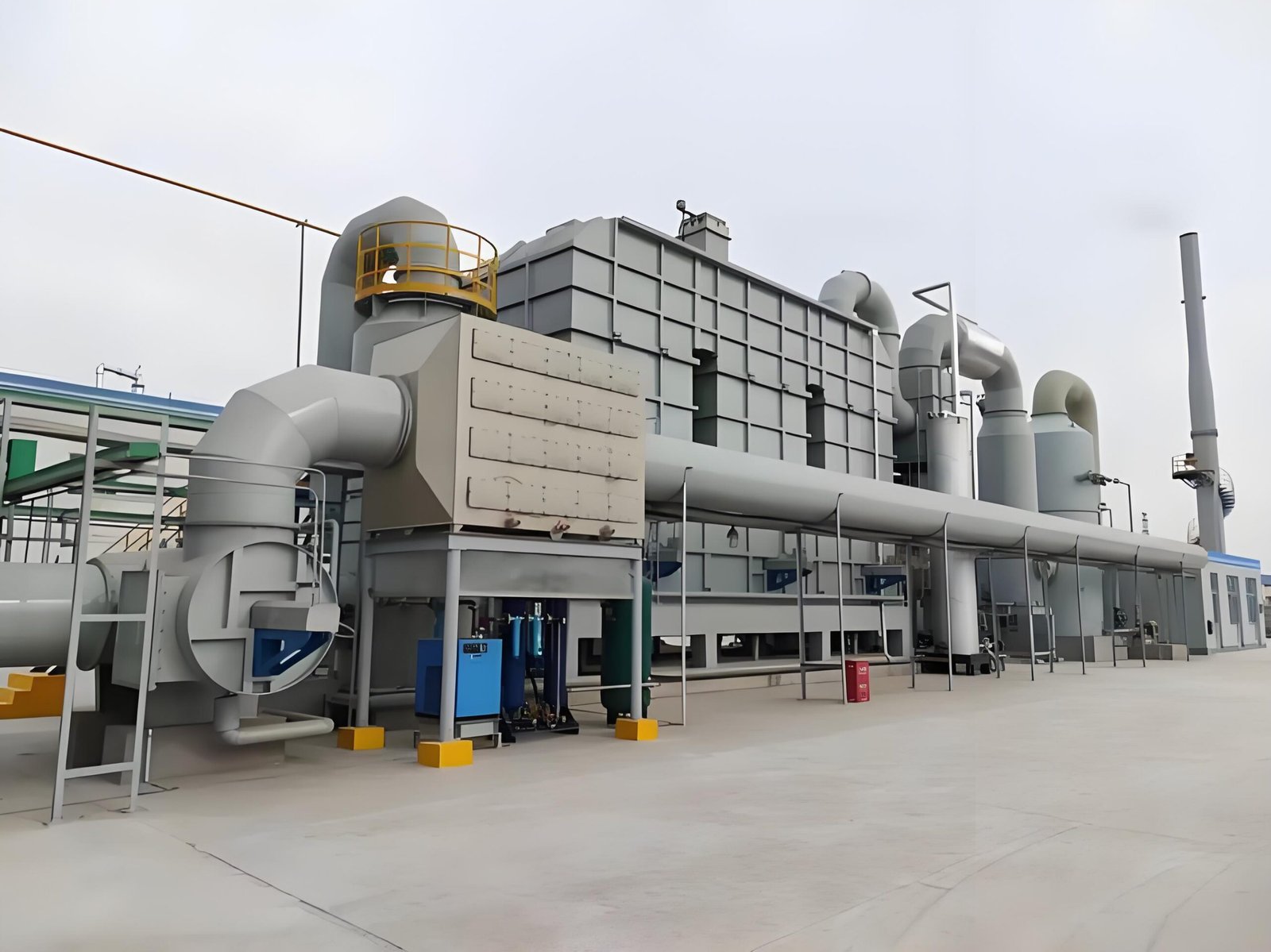
Rotor RTO combines zeolite adsorption concentration with a smaller oxidation unit. It is often useful when airflow is large but VOC concentration is relatively low, which is common in coating booths and ventilation streams.
The final decision should compare concentration ratio, rotor compatibility, pretreatment cost, fuel consumption and maintenance requirements.
- Large airflow with low VOC concentration.
- Multiple booths or lines combined into one treatment system.
- Need to reduce oxidation equipment size and fuel consumption.
- Solvent mix compatible with zeolite concentration.
Common mistakes in coating VOC projects
A common mistake is combining all exhaust streams without checking concentration differences. Another is ignoring pretreatment for paint mist, resin particles or high-boiling organics that can affect adsorption media and ceramic media.
- Do not send paint mist directly into zeolite rotor or RTO media.
- Do not size the system only by maximum fan airflow.
- Do not ignore LEL monitoring and emergency bypass design.
- Do not compare quotations without confirming supply scope.
| Project question | Why it matters |
|---|---|
| Is paint mist present? | Mist can block rotor media, filters and ceramic media. |
| Is concentration stable? | Stable exhaust is easier for direct RTO design. |
| Is airflow very large? | Large low concentration airflow may fit Rotor RTO. |
| Are solvents compatible? | Solvent profile affects adsorption and oxidation route. |
FAQ
What project data should be prepared before asking for quotation?
At minimum, prepare airflow, VOC concentration, solvent or VOC composition, exhaust temperature, humidity, dust or mist content, operating hours, emission limit and installation location. Without these data, suppliers can only give a rough direction.
Can SERNO provide only equipment or a complete system?
SERNO can discuss different supply scopes, from main equipment to a more complete package with duct interface, safety controls, electrical cabinet and engineering support. The final scope should be confirmed in the quotation boundary.
Is Rotor RTO always cheaper than direct RTO?
No. Rotor RTO can reduce oxidation load for large low-concentration airflow, but it adds adsorption concentration equipment. The economic result depends on airflow, concentration, operating hours and solvent profile.
Need a practical VOC treatment recommendation?
Send SERNO your airflow, VOC concentration, solvent composition, temperature, humidity, operating hours and emission target. We can help compare RTO, Rotor RTO, RCO and catalytic combustion options before budget quotation.
Send Project Data