 Request Proposal
SERNO Knowledge Center
RTO Thermal Efficiency and Fuel Consumption: An Engineering Guide
Regenerative thermal oxidizer fuel consumption is not a fixed value per cubic meter of exhaust. It is the result of a heat balance: the RTO must heat incoming gas to the oxidation temperature, while ceramic media recovers most of the heat and oxidized VOCs release additional energy. This guide explains the calculations, field variables and design decisions that determine whether an RTO needs continuous burner support or can approach autothermal operation.
What RTO thermal efficiency actually means
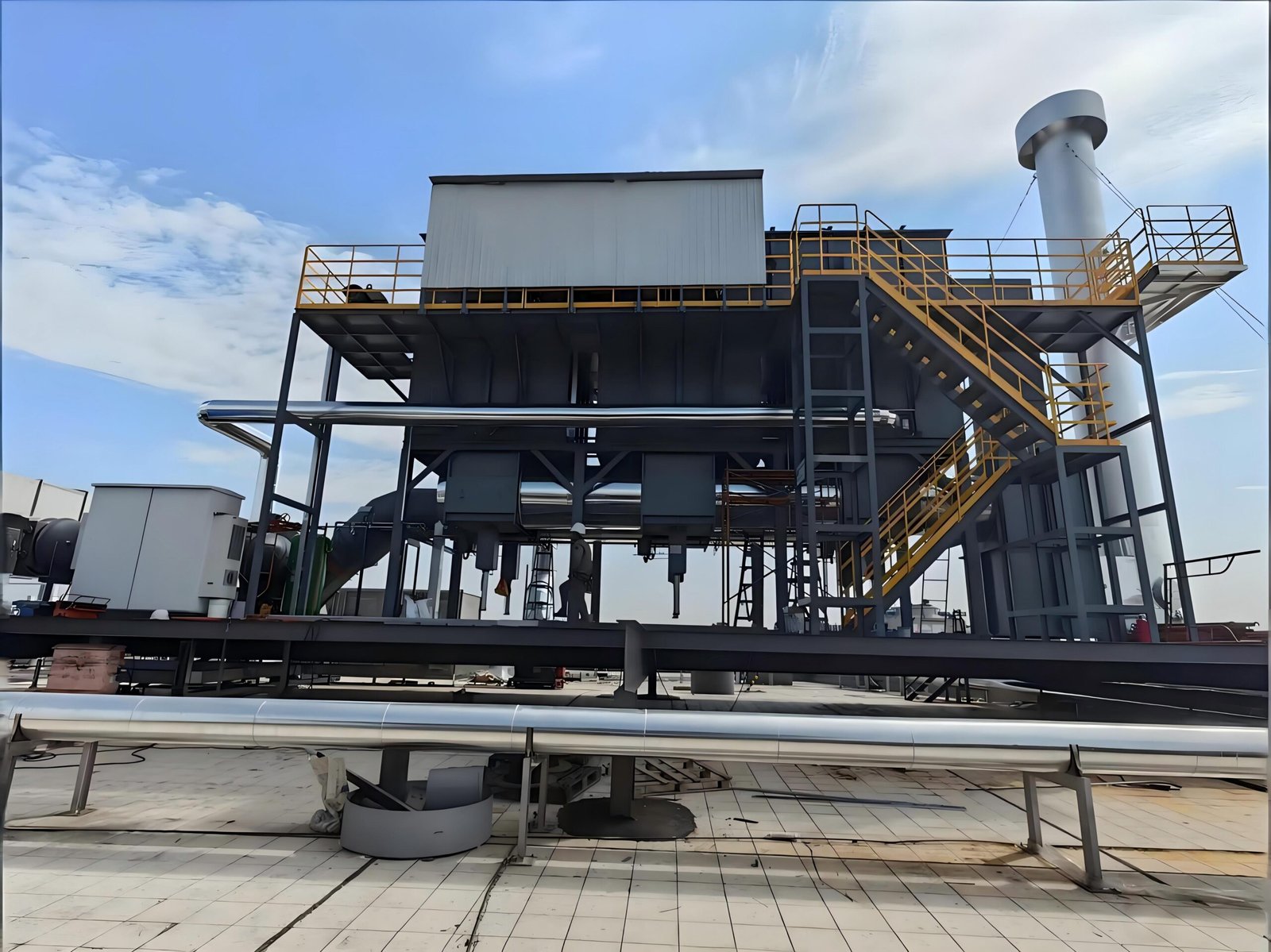
Thermal efficiency describes how effectively the ceramic beds transfer heat from the treated hot gas to the incoming untreated gas. A three-bed RTO commonly targets high heat recovery because each bed alternates between heating, cooling and purge service. Published efficiency should be treated as a design condition, not a guarantee for every operating point.
A useful first approximation is ? = (Tpreheat ? Tinlet) / (Toxidation ? Tinlet). If exhaust enters at 40?C, the combustion chamber operates at 820?C and the preheated gas reaches 742?C, the apparent thermal efficiency is (742?40)/(820?40), or 90%. A five-point change in efficiency can materially alter burner duty because the remaining temperature rise must be supplied by fuel and VOC oxidation.
- Confirm whether quoted efficiency is based on clean ceramic media and design airflow.
- Ask for inlet, preheat, chamber and outlet temperature assumptions.
- Separate thermal efficiency from VOC destruction efficiency; they measure different performance.
- Include casing loss, purge flow, leakage and burner excess air in the final heat balance.
| Parameter | Example design value | Engineering effect |
|---|---|---|
| Inlet temperature | 40?C | Warmer process exhaust reduces required sensible heating. |
| Oxidation temperature | 760?850?C | Higher setpoint increases duty but may be required by VOC chemistry or permit conditions. |
| Thermal efficiency | 90?95% | Higher recovery reduces the temperature lift supplied by burner and VOCs. |
| VOC concentration | 1?4 g/Nm? | Higher combustible loading can reduce support fuel, subject to LEL limits. |
A practical burner-duty calculation
For screening calculations, the sensible heat required after regeneration can be estimated as Q = m ? Cp ? (Toxidation ? Tpreheat). Air mass flow is volumetric flow corrected to the actual temperature and pressure, then multiplied by gas density. Engineers add heat loss, purge air, leakage and burner efficiency before converting the result to natural-gas consumption.
Consider 30,000 Nm?/h of exhaust, a 780?C required rise from inlet to chamber, and 95% heat recovery. The unrecovered temperature lift is roughly 39?C. Using a representative gas density of 1.29 kg/Nm? and Cp of 1.05 kJ/kg?K gives about 1.59 GJ/h of sensible duty before losses. At 90% burner efficiency and 35.8 MJ/Nm? lower heating value, the theoretical support-gas demand is about 49 Nm?/h before subtracting VOC heat release. This is a screening result, not final equipment sizing.
The same case at 90% recovery leaves a 78?C lift and roughly doubles the sensible duty. This is why ceramic selection, bed depth, switching sequence and leakage control influence lifecycle cost.
- Normalize airflow and concentration to a clearly stated temperature, pressure and moisture basis.
- Use the lower heating value consistently for both fuel and VOC calculations.
- Apply realistic burner efficiency and casing-loss allowances.
- Model minimum, normal and peak production cases rather than one average point.
How VOC heat release changes fuel consumption
VOC oxidation releases heat. The available contribution can be estimated from VOC mass flow multiplied by the mixture heating value and expected oxidation fraction. For example, 30,000 Nm?/h at 2 g/Nm? contains about 60 kg/h of VOC. If the representative lower heating value is 30 MJ/kg, the chemical input is approximately 1.8 GJ/h. After considering moisture, excess air, heat loss and control margins, this load may cover much or all of the sensible duty in the example above.
The calculation must use actual solvent composition. One total-VOC reading cannot reveal calorific value, silicon content, halogens, sulfur, polymerizable compounds or high-boiling material. Safety limits also override energy optimization: concentration must remain within the approved fraction of the lower explosive limit, with monitoring, dilution and interlocks designed for credible peaks.
- Request normal, minimum and peak VOC concentration.
- Obtain solvent names, mass fractions and SDS information.
- Check sampling method and whether values are expressed as carbon or as the actual compound.
- Do not increase VOC concentration solely to save fuel without a formal process-safety review.
Why field fuel use differs from the proposal
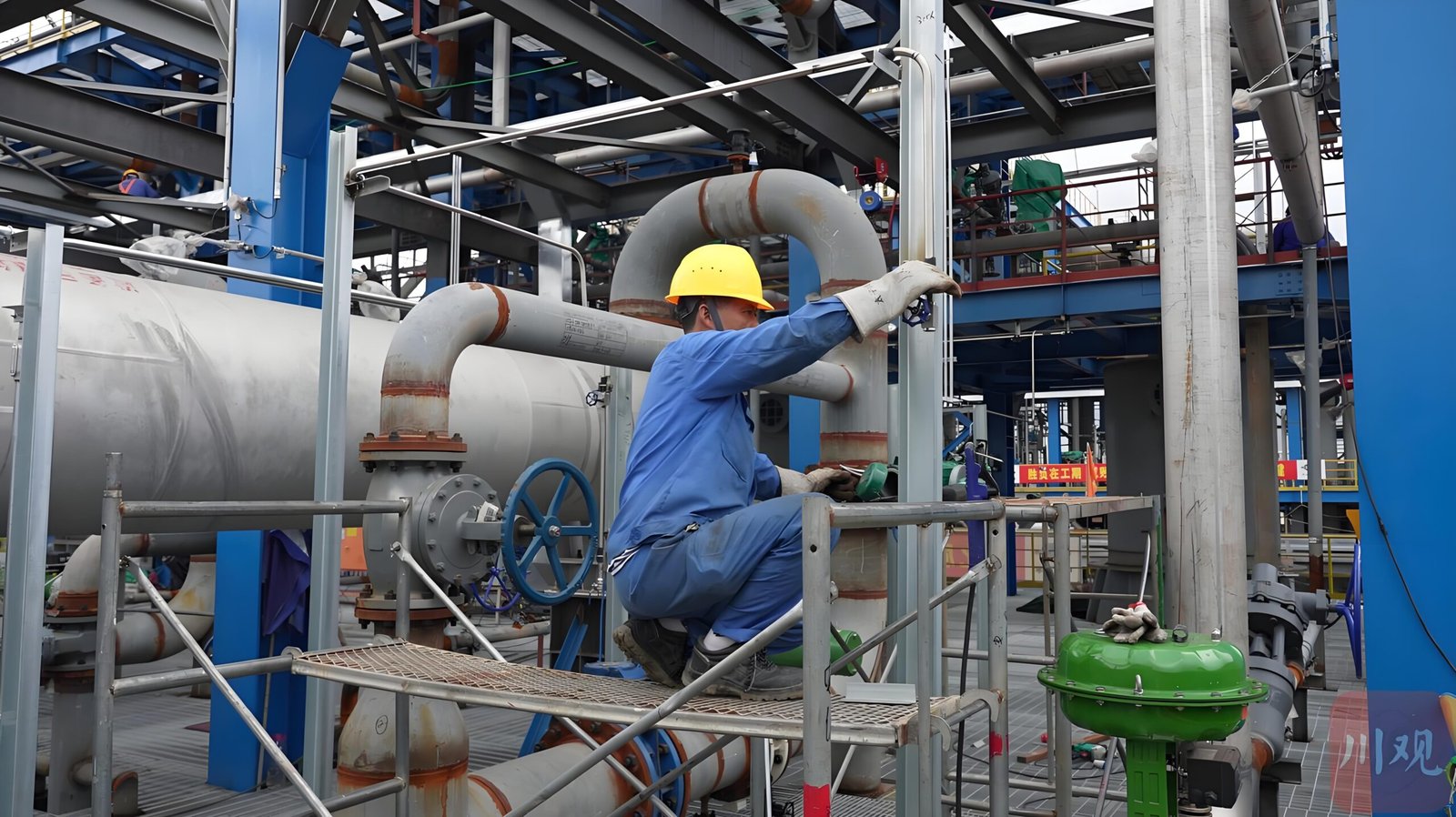
A proposal typically models steady operation at design airflow. Real plants have startup periods, product changes, idle ventilation and seasonal conditions. During cold startup the ceramic media and steel structure must be heated, so the burner consumes more fuel than during stable production. Short shifts may never recover the startup energy over enough operating hours.
Air leakage is another common cause. Open access doors, poorly sealed dampers, negative-pressure duct leaks and excessive dilution air increase the mass that must be heated. Ceramic blockage raises pressure drop and may force the fan away from its efficient operating point. Valve leakage allows untreated and treated streams to mix, reducing both recovery and emission performance.
- Track fuel per production hour and per kilogram of product, not only monthly total.
- Trend inlet, chamber, bed outlet and stack temperatures.
- Record airflow, fan speed, pressure drop and valve switching alarms.
- Separate startup fuel from steady-state fuel when comparing performance.
Design choices that improve energy performance
Higher ceramic-media volume can increase heat recovery, but it also raises capital cost, equipment size and pressure drop. The correct design balances bed depth, ceramic geometry, gas velocity, switching time and fan power. A headline thermal-efficiency number should therefore be reviewed together with electrical consumption and maintenance access.
Variable-frequency fan control can reduce unnecessary airflow when production lines are offline, provided the RTO remains within its validated velocity, residence-time and switching limits. Process integration may also recover stack or chamber heat for ovens, hot water or make-up air. Any heat-reuse circuit needs isolation, temperature control and a clear response to RTO shutdown or bypass conditions.
- Use production-line signals to match exhaust flow to actual demand.
- Specify insulation for local ambient temperature, wind and outdoor exposure.
- Maintain ceramic media, seals, valves and burners on a documented schedule.
- Evaluate useful heat recovery only after the RTO safety and emission duty is secured.
Data to request in a supplier energy review
A credible energy comparison states the design basis. Buyers should ask each supplier to calculate the same minimum, normal and maximum cases and to identify what is included in the fuel estimate. Comparing one vendor at 95% recovery and another at 90% without checking pressure drop, leakage and operating assumptions is not an equal comparison.
For an existing plant, provide at least one week of synchronized operating data. Hourly airflow, VOC concentration, chamber temperature, fuel meter readings, production status and ambient temperature are far more useful than a single monthly bill. The supplier can then distinguish process variation from equipment degradation.
| Required input | Minimum information |
|---|---|
| Exhaust flow | Minimum, normal and maximum Nm?/h for each source. |
| VOC profile | Compound list, concentration range, peaks and test method. |
| Operation | Shift length, starts per week, idle periods and seasonal changes. |
| Utilities | Fuel type, lower heating value, pressure and electricity tariff. |
| Performance target | Emission limit, destruction efficiency, chamber temperature and residence time. |
Engineering conclusion
RTO fuel consumption should be predicted from a transparent heat and mass balance, then validated with operating data. Thermal efficiency is important, but VOC heating value, airflow control, leakage, startup frequency, pressure drop and maintenance condition can be equally important.
For procurement, request calculations at several operating cases and make the assumptions part of the technical agreement. For troubleshooting, trend the temperatures and flows that define the heat balance before adjusting burner settings. This approach turns fuel use from a vague sales claim into a measurable engineering performance indicator.
FAQ
What thermal efficiency is typical for an RTO?
Many industrial RTO designs target approximately 90?95% thermal efficiency under defined design conditions. The achieved value depends on ceramic media, bed size, airflow, switching sequence, leakage and maintenance condition.
When can an RTO operate without continuous support fuel?
Autothermal operation may be possible when VOC heat release covers sensible heating and system losses. The threshold must be calculated from actual solvent composition, concentration, airflow and safety limits; it is not one universal concentration.
Does higher thermal efficiency always mean lower total operating cost?
Not automatically. More media or lower gas velocity can improve heat recovery but may increase equipment cost and fan power. Total cost should include fuel, electricity, maintenance and production schedule.
Why is fuel consumption high during startup?
The burner must heat ceramic media, chambers and ductwork from ambient temperature before process exhaust is admitted. Frequent short runs therefore use more fuel per production hour than continuous operation.
What data does SERNO need for an energy estimate?
Provide airflow range, inlet temperature, VOC concentration and composition, operating hours, starts per week, oxidation requirement, fuel specification and local ambient conditions.
Need a practical VOC treatment recommendation?
Send SERNO your airflow, VOC concentration, solvent composition, temperature, humidity, operating hours and emission target. We can help compare RTO, Rotor RTO, RCO and catalytic combustion options before budget quotation.
Send Project Data