 Request Proposal
RTO Waste Heat Recovery Feasibility: Define the Useful Heat Before Buying Hardware
An RTO exhaust stream may contain useful energy, but a hot stack is not by itself a business case. The heat source and the receiving process must overlap in time, temperature and controllability. This guide gives industrial buyers a disciplined way to scope an RTO waste heat recovery study. It describes general engineering practice, not a predicted saving or a SERNO project result.
1. Draw the heat and emissions boundaries
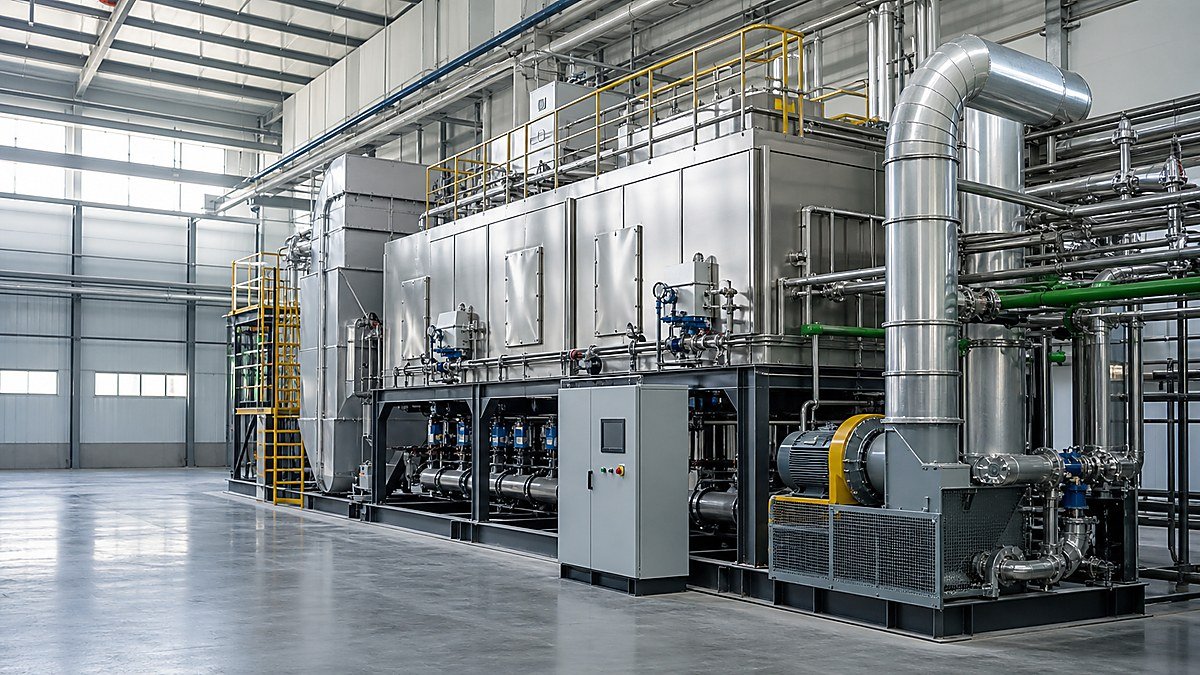
Start with the approved RTO process flow diagram. Identify the clean-side location proposed for recovery, stack path, bypass or isolation arrangement, fan, dampers and instrumentation. Confirm with the equipment supplier and site EHS team where an exchanger can be installed without changing required combustion, residence-time or emissions-control functions. A proposed tie-in must preserve safe startup, shutdown and fault handling; do not treat a recovery bypass as permission to bypass abatement.
2. Measure the source across representative production
Log exhaust temperature, flow, pressure, fan condition and RTO operating mode at a common timestamp. Include high, normal, low and idle production, as well as switching-cycle behavior. Verify measurement locations and calibration before turning historian averages into design inputs. The gas-distribution verification guide explains why phase-aligned RTO trends matter. Separate operating hours from calendar hours, and mark maintenance and process changeovers.
3. Define a real heat sink
Name the receiving duty: process water, wash water, makeup air or another engineered load. Record its inlet and target temperatures, flow range, seasonal schedule and acceptable interruption. A steady source paired with an intermittent sink may need storage, modulation or a different recovery scope. Do not assume that nameplate heating demand is available whenever the RTO runs.
4. Calculate a conservative usable duty
An initial screen can use mass flow, heat capacity and an allowable temperature difference, but the approach temperature, exchanger effectiveness, pressure drop and minimum safe outlet temperature require engineering review. Model at least three coincident operating cases, not just one peak case. Exclude heat that cannot reach the sink at its required temperature or during its operating hours. Account for additional fan power and pumping before comparing net utility benefit. Avoid publishing a savings percentage until site measurements and a verified model support it.
| Evidence | Source side | Receiving side | Decision it supports |
|---|---|---|---|
| Timestamped load profile | Exhaust flow and temperature by mode | Demand flow and inlet temperature | Coincident usable hours |
| Temperature limits | Permitted stack and material limits | Required supply temperature | Feasible approach and duty |
| Hydraulic allowance | Available draft and fan margin | Pump head and control valve range | Parasitic energy and operability |
| Outage and cleaning plan | RTO access and isolation | Production interruption tolerance | Maintainable layout |
5. Check fouling, condensation and materials
The exhaust composition, particulate carryover, moisture and acid-dew-point potential affect exchanger selection and cleaning access. Do not infer material compatibility from a generic VOC label. Obtain the actual stream characterization and review abnormal conditions, including startup and low load. Condensation can damage the exchanger, ducting or downstream stack if it is not explicitly managed. The insulation and cladding inspection guide is relevant when assessing existing heat-loss and corrosion evidence.
6. Protect RTO control and safety functions
An added exchanger changes pressure drop and may affect fan operating point. Define fail positions, high differential-pressure alarm, temperature limits, isolation, freeze protection where applicable, and a maintenance bypass for the recovery circuit. Review cause-and-effect logic with the original RTO safeguards. A failed heat sink must not force an unsafe RTO operating state. Commission in stages and record baseline emissions-control operation before and after the modification.
7. Write a comparable procurement scope
Ask bidders to state the same source and sink cases, guaranteed design boundary, fouling allowance, pressure drop, access and cleaning method, materials basis, controls interface, utilities, installation outage and acceptance tests. Separate equipment supply from duct, structural, electrical and commissioning work. Request an alternate for future load variation where production is expected to change. The low-load operation guide helps frame turndown questions.
FAQ
Can every RTO support waste heat recovery?
No. The usable temperature, coincident sink demand, exhaust composition, pressure-drop allowance and safe tie-in location vary by installation. A measured feasibility study comes before hardware selection.
Is a higher stack temperature proof of better economics?
No. Flow, operating hours, sink temperature and integration cost can dominate. Compare net recovered utility after fan and pump penalties, not stack temperature alone.
What should be measured before requesting quotations?
Gather synchronized source and sink load profiles, current drawings, exhaust composition, fan margin, stack-temperature constraints, utility costs and planned outage windows. Mark uncertainties rather than converting assumptions into guarantees.
Discuss the boundary with SERNO
Share a current PFD, representative operating trends and the proposed receiving duty with SERNO. An engineering review can identify the missing measurements and establish a comparable scope before you commit to a recovery package. Contact: saierno.com.