 Request Proposal
Catalytic Combustion
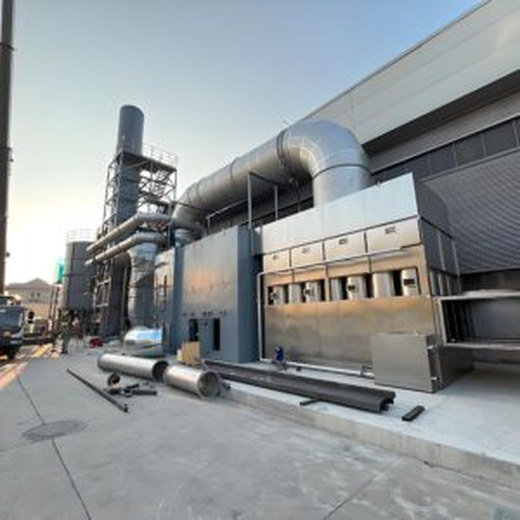
Catalytic combustion furnace for desorption gas and compact VOC treatment.
This equipment is often reviewed with activated carbon adsorption-desorption systems where concentrated desorption gas needs catalytic oxidation.
Typical system role
Activated carbon captures VOCs from lower-concentration exhaust. During regeneration, a smaller desorption airflow carries concentrated VOCs to the catalytic combustion furnace for oxidation.
Configuration review
- Adsorption bed quantity and switching schedule.
- Desorption air volume, temperature and concentration range.
- Catalyst chamber, preheating, heat exchanger and safety interlocks.
- Fire prevention, temperature monitoring and emergency purge logic.
Before selection
Confirm solvent composition, desorption concentration, carbon bed design, regeneration cycle and emission target. For larger continuous exhaust, RTO or Rotor RTO may be more suitable.
Typical selection range
- Application: concentrated desorption gas from activated carbon adsorption-desorption systems.
- Best fit: compact VOC treatment systems and smaller concentrated airflow streams.
- Review focus: desorption air volume, concentration fluctuation, temperature and catalyst compatibility.
Standard supply scope
- Catalytic combustion chamber, catalyst, preheating unit, heat exchanger and insulation.
- Temperature monitoring, fire prevention logic, emergency purge and safety interlocks.
- Integration review with adsorption beds, desorption cycle, fan and ducting interface.
FAQ
Is it suitable for large continuous exhaust? For large continuous exhaust, RTO or Rotor RTO is often reviewed first; catalytic combustion is commonly used for concentrated desorption gas.
What data is needed? Adsorption bed design, regeneration cycle, desorption airflow, VOC concentration, solvent composition and emission target.